Manuka Honey: Decoding UMF and MGO Ratings at Last
UMF 10+ equals roughly 263 mg/kg of methylglyoxal. What the grades mean, who certifies them, and why manuka honey costs so much.
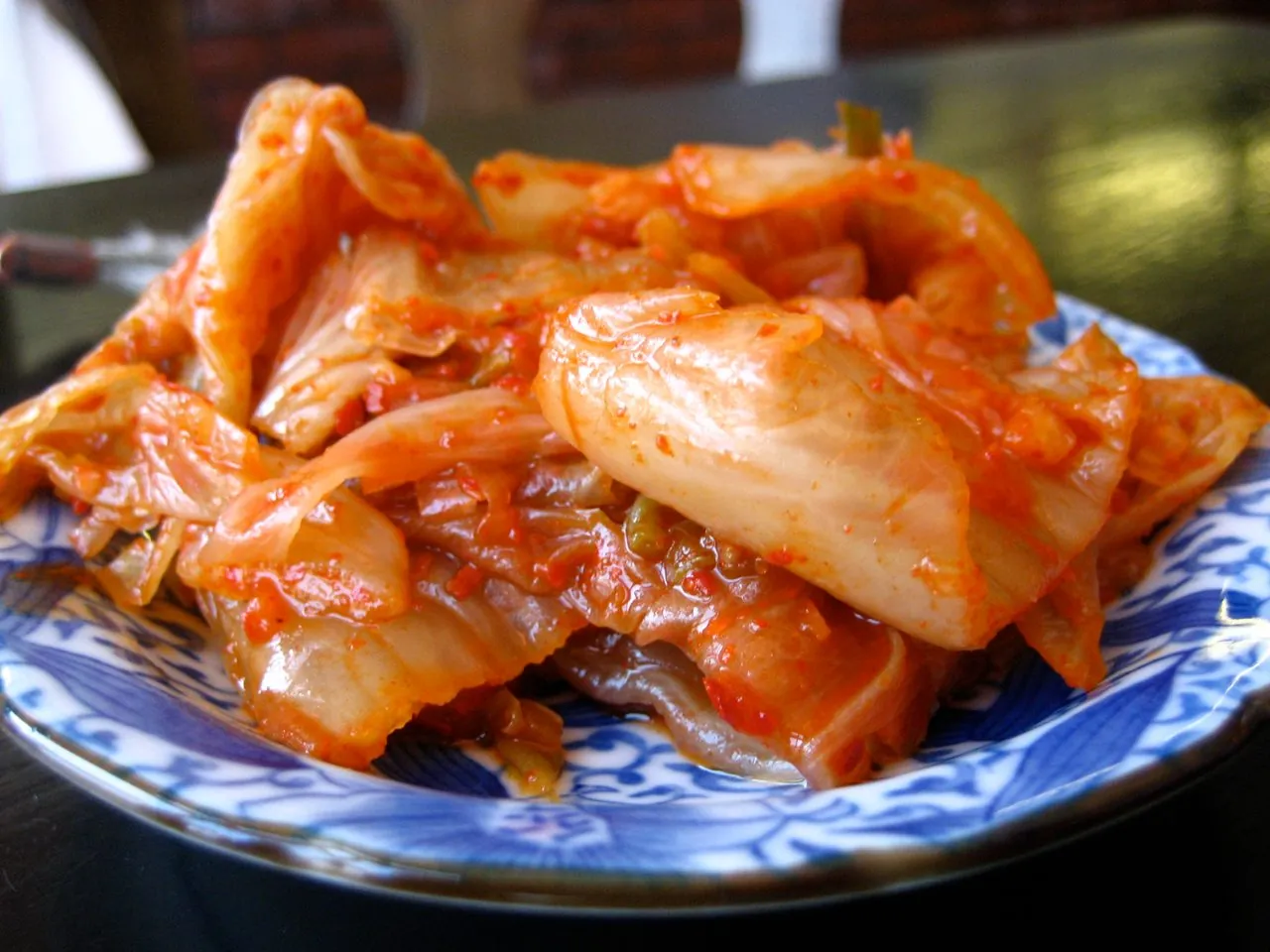
Late November in Korea has a smell: cold air, brine, raw garlic and chili. Kimjang, the great late-autumn kimchi make, is the moment when households stop putting up kimchi a jar at a time and make it a season at a time — enough to carry a family from the first hard frost to spring. Relatives gather, neighbors trade labor and finished batches, and the busiest kitchens turn out enough kimchi to feed a street. In 2013, UNESCO put the ritual on the world’s heritage list, and the reason it gave was less about cabbage than about sharing.
Kimjang runs, in most years, from late November into December, timed to the weather rather than the calendar. Napa cabbage planted in late summer is ready when the first hard frosts arrive, and cold is part of the recipe: cabbage harvested after a chill is sweeter and firmer, and winter temperatures do half the work of fermentation control. The scale is the point. A single kimjang session might process dozens of heads for a large household, because the batch is meant to last months and to be given away. Villages and extended families have always organized the labor communally — a day when everyone brings hands, and every household leaves with jars. No one in the yard is a guest; children rinse cabbage, elders taste the paste, and the oldest hands set the standard everyone else chases. The custom is old enough that its rhythms are simply assumed rather than announced: when the frost comes and the cabbages come in from the fields, it is time.
The method is a brine, a paste and a great many hands. Napa cabbage is quartered lengthwise, salted between the leaves and left to wilt until the thick white ribs bend without snapping, then rinsed and drained. Meanwhile the seasoning comes together.
The paste is worked leaf by leaf into the salted cabbage — gloves on, palms flat, from the outer leaves inward — and the packed bundles are folded over themselves and pressed down into containers with real force, because an air pocket is where a batch goes wrong. Hundreds of regional and family variations exist, and Korean cooks can read a kimchi’s home in its seasoning; the batch is a signature as much as a store.
Traditionally, finished kimjang kimchi went into onggi, the lidded earthenware pots that Korean kitchens have used for centuries, set against a north-facing wall or partly buried so the contents stayed cold but not frozen. The porous clay breathes, letting fermentation gases escape while the steady chill lets lactic acid bacteria do their slow work. Modern kitchens have swapped the buried pot for the dedicated kimchi refrigerator, which holds a careful low temperature and lets a household steer sourness across the weeks. What has not changed is the patience the process demands; sourness cannot be rushed, only waited for. The science is the quiet star of the whole ritual: the heavy salting excludes the wrong microbes, the garlic, ginger and chili add inhibitions of their own, and the bacteria that thrive are the ones that turn the cabbage pleasantly sour, complex and stable enough to last a winter in the ground.
In December 2013, UNESCO inscribed the practice on the Representative List of the Intangible Cultural Heritage of Humanity, under the formal name ‘Kimjang, making and sharing of kimchi.’ The wording rewards attention. What was listed was not a recipe, not the food itself, and not Korean cuisine in general, but the communal, seasonal act — making a winter’s supply together and sharing it, the part of kimjang that binds neighbors and generations. The nomination emphasized that the practice affirms identity and cooperation, that it is transmitted in kitchens rather than schools, and that it is repeated every year, which is what intangible heritage means in practice: a tradition kept alive by being done, again, on schedule, by people who could easily buy the jars instead.
Apartment living has shrunk the batch; a household kimjang today may fill a refrigerator drawer rather than a row of buried pots. But the custom has proven adaptable rather than fading. Community kimjang events pack kimchi for charities and neighbors, offices and schools hold their own makes, and Korean communities abroad keep the season wherever napa cabbage is sold. The date moves with the weather and the region, but the call to gather does not. The food industry sells year-round kimchi of every style and heat level, and yet the late-autumn batch still carries a status no store-bought jar holds — the taste of a household, made by its own hands, just before the cold. Kimjang has already survived the shift from village to city, from onggi to refrigerator, from subsistence to supermarket. The sharing, it turns out, was the durable part; the rest is details that each generation works out with fresh gloves and better containers.
UNESCO recognised a shared cultural practice, not a standard recipe or a safety approval for every jar. A discussion of buried pots should therefore not become advice to store an improvised batch outdoors. Salt concentration, acidity, temperature and ingredients differ between preparations, and traditional descriptions do not supply those controls.
For a reader planning a kimjang day, the useful decisions come before mixing: choose a complete recipe from a reliable fermentation source, calculate the container space, identify seafood allergens and arrange refrigeration. Label batches by recipe and preparation date rather than treating every family variation as interchangeable. Keep utensils and hands clean, and use food-grade containers with room for fermentation gases. A recipe that relies on a measured brine cannot be reproduced by adding salt until it tastes right.
For a cultural discussion, ask a different set of questions: who gathers, who passes on the method, how the finished kimchi is shared and how urban living has changed the scale. Those are the dimensions the inscription addresses. They explain the practice without turning cultural status into a claim that an unmeasured preservation method is safe.
A cultural account, not a validated fermentation or shelf-stable preservation recipe.
UMF 10+ equals roughly 263 mg/kg of methylglyoxal. What the grades mean, who certifies them, and why manuka honey costs so much.
Free acidity below 0.8 percent, peroxide under 20, mechanical extraction only. The International Olive Council rules behind the bottle.
Since 1882 the Essex coastal town has produced crystalline pyramid flakes. What makes flake salt different and when it earns its price.