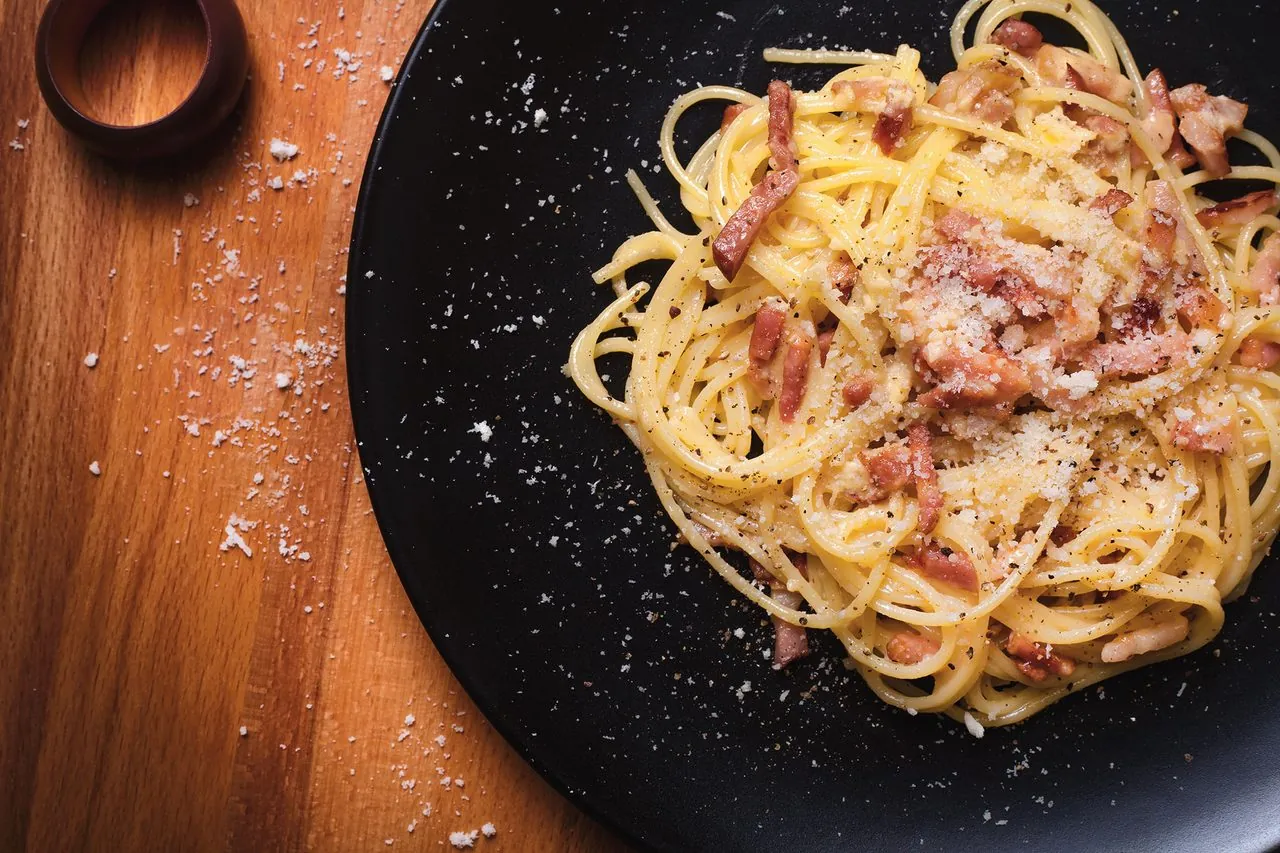
Spaghetti alla Carbonara: The Roman Original, Done Right
Guanciale, Pecorino Romano, eggs and pepper — no cream, no onions. How Rome’s most-guarded pasta actually comes together in 20 minutes.
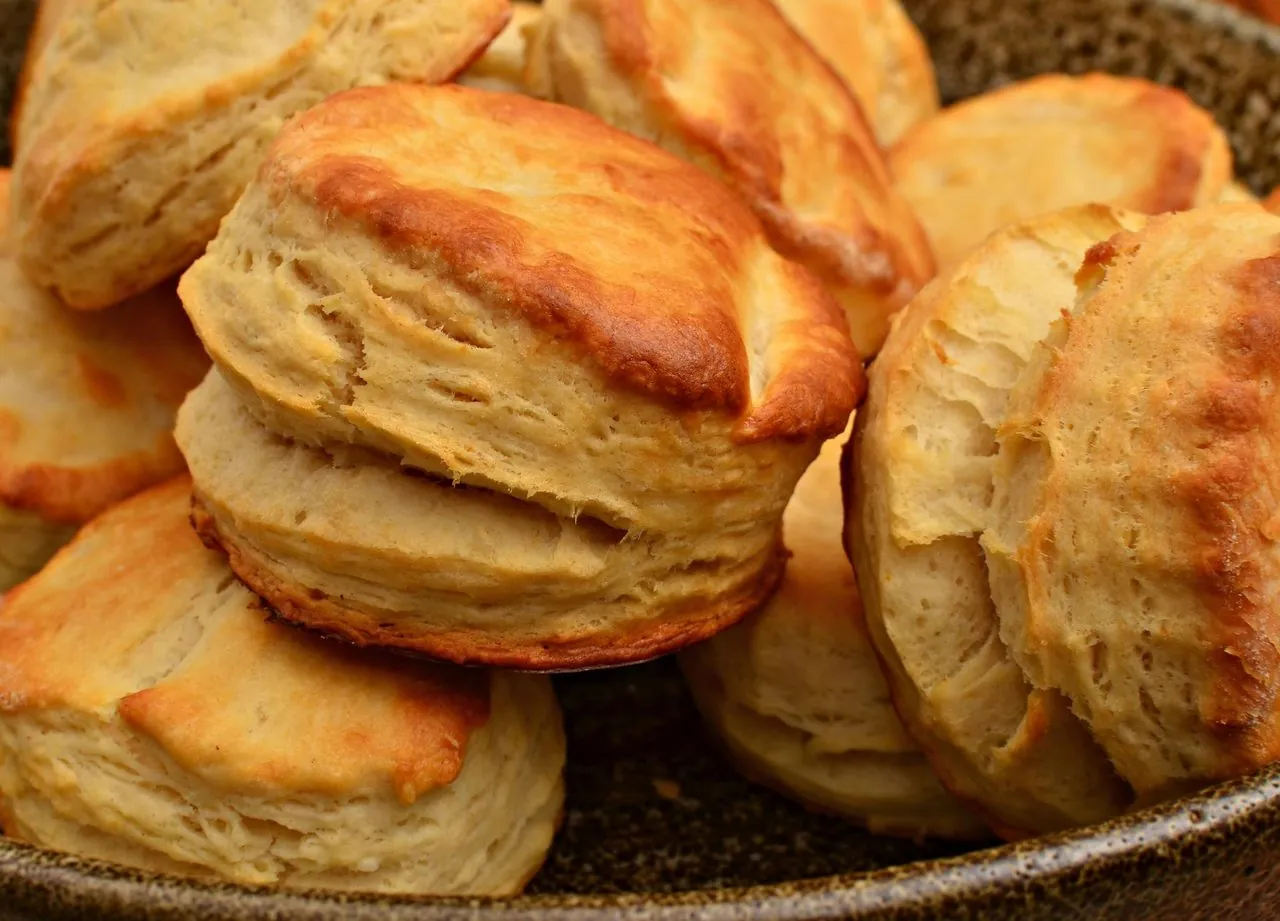
A great buttermilk biscuit is not mixed; it is constructed. The goal, visible in cross-section, is a stack of thin, distinct layers that shatter rather than crumb, and every piece of received wisdom — cold butter, a light hand, the gentle fold — is really a rule about managing butter's physical state and gluten's temper. Get the physics right and the same four ingredients that produce hockey pucks on a careless day produce a dozen tall, golden, shattering biscuits on a good one. None of it is magic. All of it is thermodynamics you can hold in your hands.
For a published starting point, King Arthur's buttermilk-biscuit formula uses 360 g all-purpose flour, one teaspoon table salt, one tablespoon each baking powder and sugar, 85 g butter, and 227–255 g cold buttermilk. It yields about twelve biscuits and bakes at 425 F (220 C) for roughly fifteen to twenty minutes. This article explains how to adapt the handling for layers; it does not claim an in-house test of that recipe.
For flakier handling, use cold butter and leave some visible pieces instead of blending every trace into flour. Start with the smaller liquid quantity. If loose dry flour remains, add a little more liquid before deciding the dough needs prolonged kneading. Fold gently, then cut straight down. Reworked scraps generally need more handling, so bake them separately if you want to compare the first cuts fairly.
Change one variable at a time. A dough made with a different flour, wetter buttermilk and a new fold count cannot tell you which change affected the crumb. Note dough thickness and cutter size alongside baking time; a tall large biscuit and a thin small one do not share a finishing schedule.
Start with what a layer actually is. In a flaky biscuit, each layer is a sheet of dough separated from its neighbors by a thin film of butter. In a 425-to-450-degree oven, three forces act at once. The baking powder releases gas and inflates the dough. The butter melts, leaving gaps where it used to be. And the water in that butter flashes to steam, prying each gap wider. The result is a stack of crisp, separate planes instead of a uniform crumb.
The leavening and the architecture are different jobs. Baking powder handles the rising, and the acidity in buttermilk reacts with it for extra lift and a faintly tangy crumb. The butter, meanwhile, determines whether the interior reads as shattering layers or as dense cake. Which is why every rule that follows is, one way or another, a rule about keeping butter where you put it.
Butter melts at body temperature, which makes your hands the enemy. Keep the butter refrigerated until the moment it goes into the flour, cut it into small chunks, and work it in briefly until the pieces range from sandy crumbs to visible, pea-sized nubs. Those visible chunks are the future layers, and every one you smear into the flour in advance is a layer you will never get back. On warm days, some bakers even chill the bowl and the flour; it sounds precious until you watch a summer batch lose its layers in real time.
Minimal handling matters for a second reason, too. Flour forms gluten when it meets liquid and gets worked, and gluten is chewiness. A biscuit wants tenderness, so stir the buttermilk in just until a shaggy dough forms and stop the moment it holds together. Rough is fine. Smooth means trouble.
Here is the step most recipes bury and the science explains: fold the dough over itself several times. Turn the shaggy mass onto the counter, pat it into a rectangle, fold it in thirds like a letter, pat again, and repeat a few times. Each fold multiplies the layers — what starts as a handful of butter chunks becomes, after four or five folds, dozens of thin sheets of dough with butter between them. It is laminating in miniature, the same logic as croissant dough executed in ninety seconds instead of two days.
The fold also solves the height problem without extra leavening. Stacked layers rise taller and more evenly than a single pat of dough, which is why the fold-and-pat method produces biscuits that stand up rather than spread out. Press to about an inch of thickness, cut straight down without twisting the cutter — twisting seals the edges and strangles the rise — and bake them close together if you want soft sides, spaced apart if you want crisp ones all around.
A hot oven is non-negotiable: about 425 to 450 degrees, until the biscuits are tall and golden, generally twelve to fifteen minutes depending on size. The initial blast of heat matters because it melts the butter and converts its water to steam before the dough has time to set around it. Butter that melts slowly in a cool oven simply soaks into the crumb, and the layers collapse into uniformity. A hot oven also drives the baking powder's second reaction, which activates when the dough gets hot and buys the biscuit its final push of height. Slide the pan in, leave the door closed, and let the thermodynamics finish the argument.
Most biscuit failures trace back to one of a handful of causes.
None of these are character flaws; they are all fixable on the next batch, which is the quiet joy of a recipe that takes twenty minutes and four ingredients to attempt.
The quantities are a starting formula adapted from published baking guidance; flour and ovens vary.
Guanciale, Pecorino Romano, eggs and pepper — no cream, no onions. How Rome’s most-guarded pasta actually comes together in 20 minutes.
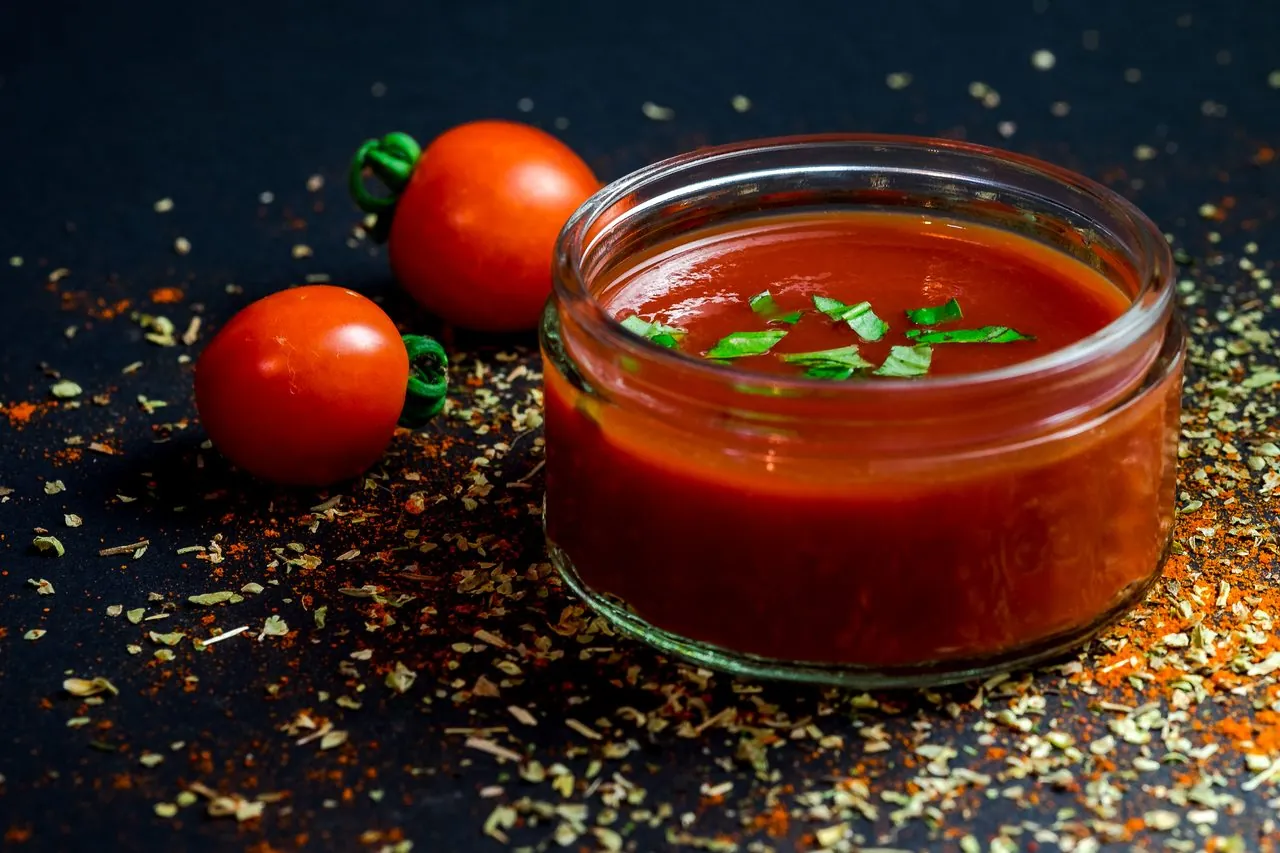
Three ingredients and 45 minutes: the late Marcella Hazan’s legendary tomato sauce remains the smartest 20 minutes of prep in Italian cooking.
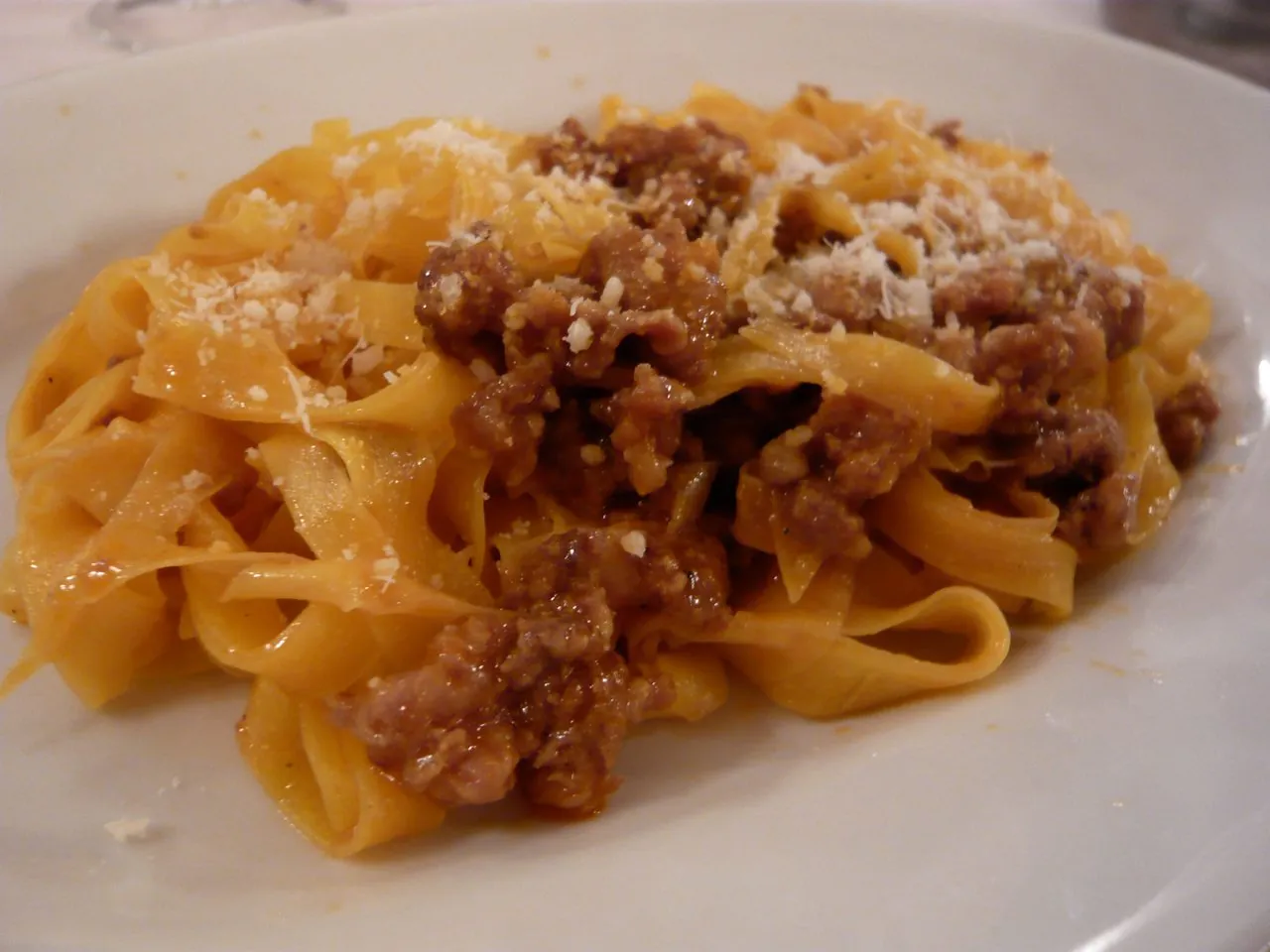
The registered Bolognese recipe: a fine soffritto, milk before wine, and three unhurried hours. What the Accademia Italiana della Cucina codified in 1982.