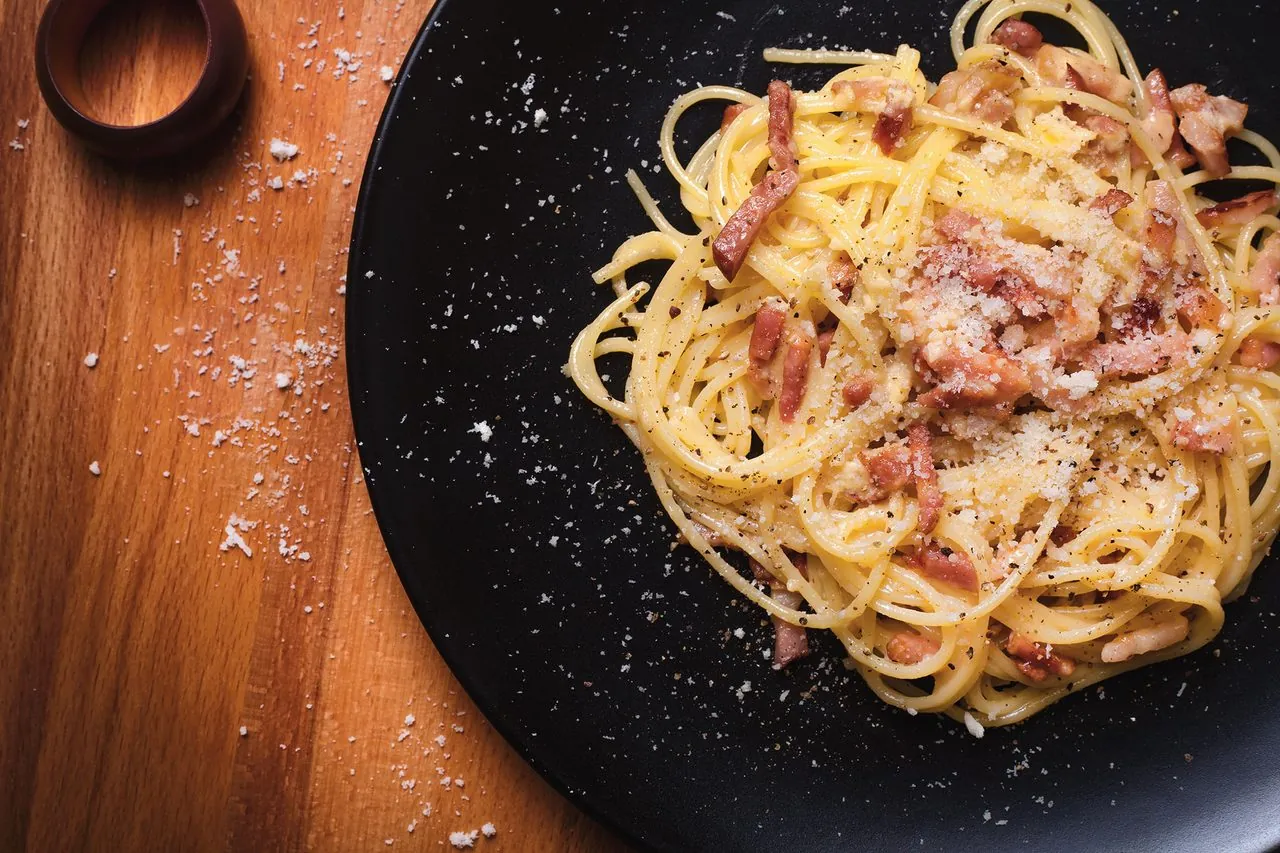
Spaghetti alla Carbonara: The Roman Original, Done Right
Guanciale, Pecorino Romano, eggs and pepper — no cream, no onions. How Rome’s most-guarded pasta actually comes together in 20 minutes.
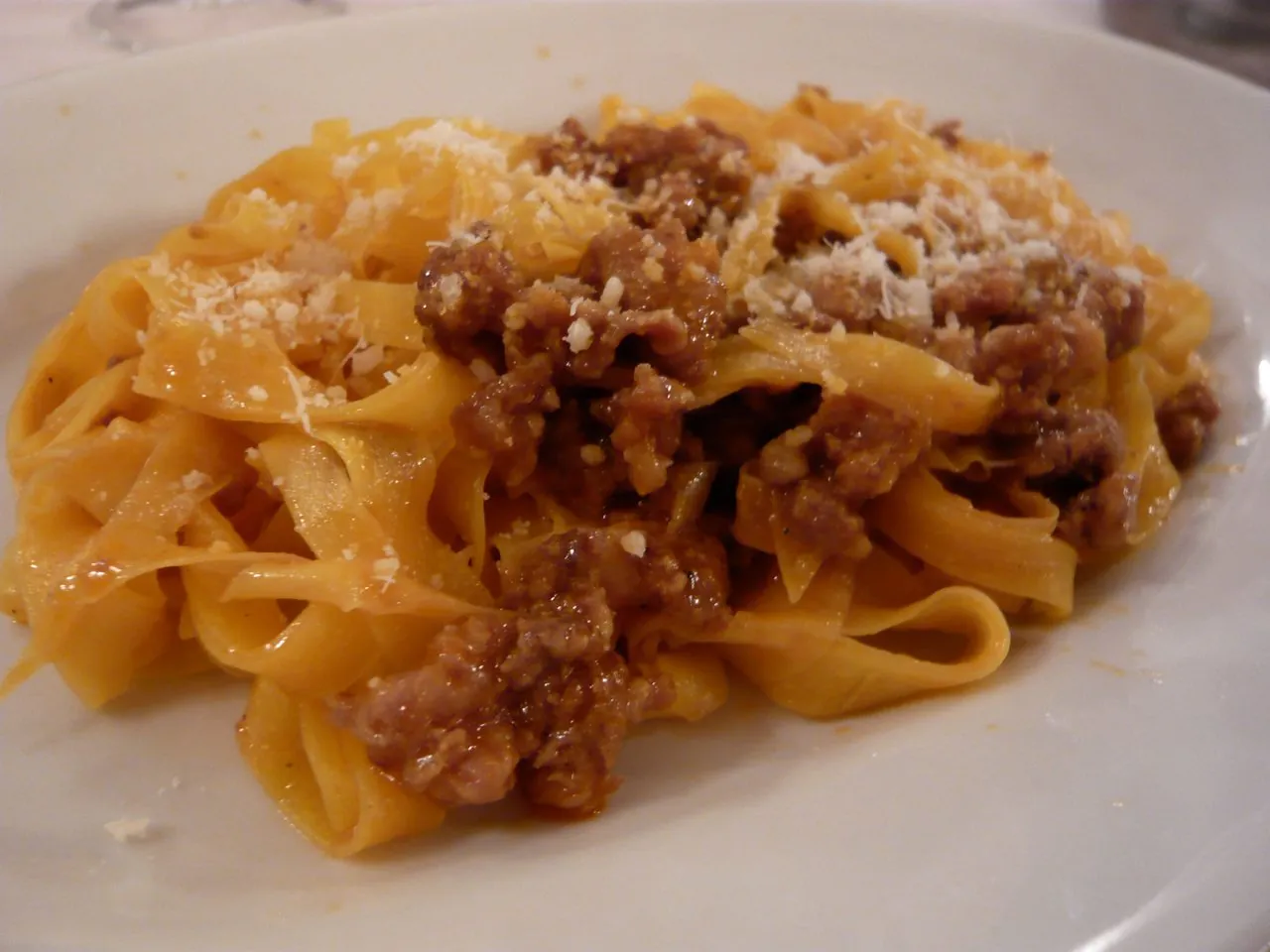
Bologna has a documented reference for its signature meat sauce. The Italian Academy of Cuisine deposited a recipe with the Chamber of Commerce in 1982 and registered an updated version in 2023. The current reference explains ingredients, sequence and optional variations. For a first pot, it is more useful to follow one complete version than to assemble an allegedly authentic sauce from incompatible rules about milk, wine and meat.
The Academy updated its registered recipe in April 2023. Its ingredient list includes 400 g coarsely ground beef, 150 g fresh pancetta, about 60 g each onion, carrot and celery, 200 g passata, a tablespoon of tomato paste, wine, broth and oil. Whole milk is optional in that version. This provides a documented reference for roughly six servings rather than evidence that every family must follow one formula.
The sequence matters when attributing a recipe: cook the vegetables and meat, add wine and let it evaporate, then add the tomato components and broth for the simmer. The optional milk is introduced during cooking, not asserted as a compulsory stage before wine. A household method using a different order should be labelled as a variation rather than assigned to the official document.
For the home pot, keep enough hot broth or water ready to prevent scorching and judge tenderness as well as thickness. Cool leftovers promptly in shallow containers and refrigerate. Large batches need deliberate cooling; leaving a deep covered pot on the counter overnight is not part of the method.
There is something fitting about a sauce this methodical having a methodical origin. The Accademia Italiana della Cucina is the body that records Italy's classic dishes, and its 1982 deposit at the Chamber of Commerce gave ragù alla bolognese a fixed reference point: a formula that home cooks could consult, argue with and pass on without the slow drift that turns one family's sauce into something unrecognizable two towns over. The registered version is not the only ragù in Bologna, and every nonna keeps her corrections — a different grind of meat, a spoonful of tomato paste, a whisper of nutmeg in the milk. But it anchors the conversation, and it is a remarkably good starting point for a first pot.
The foundation is the classic Italian soffritto — onion, carrot and celery — and the registered recipe is emphatic about the knife work: the vegetables are minced finely, to something approaching sand. This is not fussiness. Fine pieces dissolve into the fat over a long cook, thickening and sweetening the sauce from within, while chunky vegetables would stay suspended in it as a separate ingredient with separate opinions. You can do this with a knife on a steady board or pulse it carefully in a food processor, but stop before the vegetables turn to wet mush.
Sweat the soffritto gently in butter and a little oil until it softens and turns faintly golden, which takes the better part of ten minutes and sets the aromatic base for everything that follows. Then the ground meat goes in — beef with fresh pancetta in the 2023 registered version — and browns while you break it up with a spoon, so no large clumps survive. Color matters here; the browned bits are flavor banked for later.
In the 2023 registered method, wine follows the browned meat and is allowed to evaporate. The tomato components and hot broth then support the long simmer. Whole milk is optional and is added during cooking; it is not a compulsory pre-wine stage. Milk can soften the impression of the tomato and enrich the sauce, but a cook omitting it is still following an option explicitly allowed by this version. Keep the sequence attached to the source when attributing a recipe, and identify a different household method as a variation.
From there, the recipe is mostly patience. The pot settles into a slow simmer — the laziest possible bubble, never a boil — for two to three hours, partially covered, topped up with a little broth or water if it tightens before the meat is properly tender.
Somewhere in the second hour the sauce changes character: the distinct ingredients stop tasting like themselves and start tasting like ragù, and the kitchen begins to smell like the reason people romanticize Italian grandmothers. Season at the end, when the sauce has reduced enough to know what it actually needs.
In Bologna, the question of pasta is settled. Ragù alla bolognese is served with tagliatelle — wide, porous ribbons with enough surface and structure to carry a dense meat sauce — or folded into lasagne verdi. Tagliatelle is the customary pairing discussed here; a broad claim that spaghetti belongs only to Rome or cannot carry meat sauce is unnecessary. The ribbons matter more than any single ingredient in the pot, because the marriage between sauce and pasta is the entire point of the dish. Toss the drained pasta with the sauce in the pan rather than ladling it on top, finish each bowl with a dusting of Parmigiano-Reggiano, and stop there; follow the chosen version rather than assuming every historical recipe uses the same dairy additions.
The registered recipe, like all good templates, scales and freezes without complaint. Double the batch on a free Sunday and the sauce waits in the freezer for a Wednesday that needs rescuing; the flavor is genuinely better on the second day, after the components have had a night to negotiate. Read alongside its 2023 update, the earlier document records a tradition of fine knife work, the right order, low heat and time. Every one of those is available to any cook with a pot, a wooden spoon and an afternoon.
The registered 2023 recipe is a documented reference, not a claim that all Bologna households cook identically.
Guanciale, Pecorino Romano, eggs and pepper — no cream, no onions. How Rome’s most-guarded pasta actually comes together in 20 minutes.
Cold butter, a gentle fold and one extra fold of dough: the physical rules that create a dozen shattering layers in buttermilk biscuits.
Three ingredients and 45 minutes: the late Marcella Hazan’s legendary tomato sauce remains the smartest 20 minutes of prep in Italian cooking.