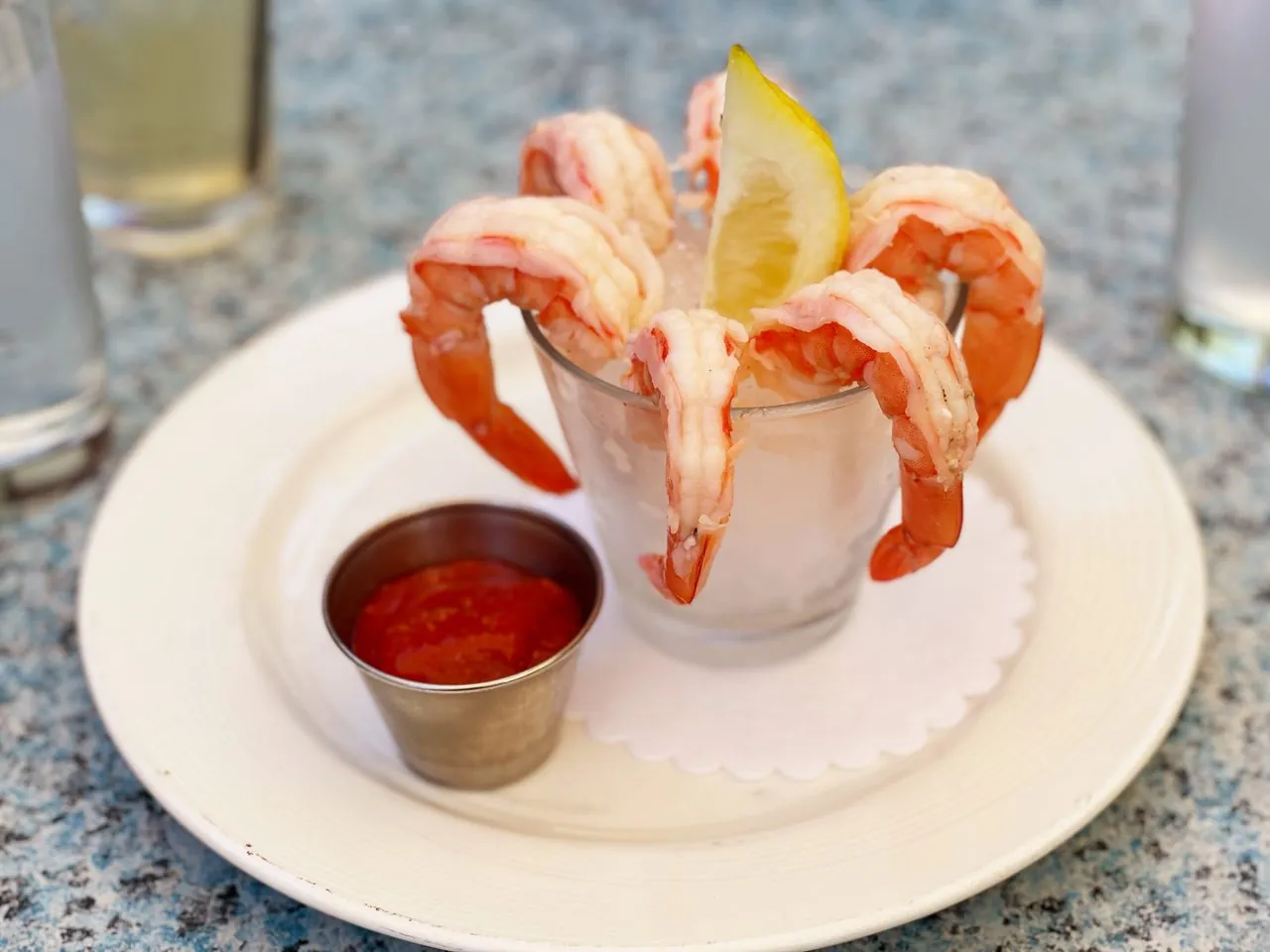
St. Elmo Steak House and the Fiery Shrimp Cocktail Legend
The Indianapolis steak house dates to 1902. Its horseradish shrimp cocktail, documented history and public game-day connection explained.
Alinea opened in Chicago in 2005 and became associated with technical cooking and theatrical service. The MICHELIN Guide Chicago 2025 lists it with two stars and describes preparations that combine flavour, presentation and guest participation. That dated selection is the reference for the rating here. Signature examples help explain the restaurant's influence without promising a particular course on a future menu.
Grant Achatz had already made his name as a prodigy of technique when he teamed up with Nick Kokonas, a restless entrepreneur with a taste for big ideas. Together they wagered that Chicago would embrace a restaurant that treated a meal as a narrative rather than a list of dishes — a place where the kitchen’s discipline would be hidden in plain sight behind performance, surprise and genuine emotion. Chicago had seen ambitious restaurants before, but never one that treated the dining room as a stage in quite this way. What they built was less a menu than a sequence of small, deliberate shocks, each one engineered to make a diner stop chewing and simply look. The city, it turned out, was ready. Critics ran out of superlatives almost immediately, and reservations became a currency of their own.
The service at Alinea is designed to be remembered decades later, and certain moments have entered the permanent lore of American dining.
None of it is decoration. Each spectacle is anchored to flavor and to technique, which is the difference between a restaurant that amuses you once and a restaurant that changes your idea of what a meal can be. The balance is deliberate and hard-won: theater that collapses without substance is a stunt, and Alinea has never once been mistaken for a stunt. Every trick has a reason, and the reason is always on the plate.
What ties the spectacles together is pacing. The evening moves like a production, with light, sound and service choreographed so that even the silences feel staged. Alinea understood earlier than most that atmosphere is an ingredient, and it seasons every course with it. Diners describe leaving with the specific disorientation of having watched something rather than merely eaten — which is precisely the point, and precisely the achievement.
In 2007, at the height of the restaurant’s early fame, Achatz was diagnosed with tongue cancer. He kept cooking through treatment, and the story became one of the defining narratives of modern American gastronomy: a chef devoted to flavor, leading a precision kitchen while unable to rely on his own sense of taste. He survived, and his palate eventually returned to him. The kitchen became, for a season, the most closely watched dining room in the country — not because of what it served, but because of who refused to stop serving it. Guests who dined there during those months understood they were watching something rare: a kitchen that treated its craft as non-negotiable.
By 2016 the room itself had earned its rest. Alinea gutted its interior completely and rebuilt it from scratch, a project of roughly four months that could have ended in disaster. Instead the restaurant closed, vanished behind construction barriers, and reopened to immediate acclaim. Regulars who returned found the same spirit in a new room, which was the only thing that mattered. The reconstruction was treated almost as openly as the cooking, with the team sharing its progress rather than hiding behind tarps. Closing a beloved restaurant is usually a sign of trouble; here it read as a statement of confidence, a bet that the idea was bigger than the furniture. The rebuilt room gave the kitchen new tools for its performances and gave the story a neat symmetry: a restaurant willing to dismantle itself in order to stay itself.
In the MICHELIN Guide Chicago 2025 selection, Alinea is listed with two stars, and its deeper legacy is a vocabulary. Chefs across the world now paint, inflate, suspend and surprise, and nearly all of them are working in a language Alinea helped write. Imitators borrowed the balloons and the painted plates; the ones who lasted borrowed the discipline underneath. The restaurant demonstrated that American fine dining could be avant-garde without being cold, that spectacle and hospitality can share a table, and that a dinner can aim for memory instead of mere satisfaction. Achatz and Kokonas, meanwhile, kept innovating off the plate as well, from the business of reservations to new rooms and concepts built on the same appetite for risk. Alinea’s real innovation was proving that wonder, carefully engineered, can be a nightly product rather than an accident. Two decades on, that handle-less door still opens on the same promise: dinner, done as if it mattered.
The 2025 Chicago selection lists Alinea with two stars. Earlier three-star recognition is part of the restaurant's history, but it cannot be substituted for a present-tense rating in a later article. Keeping the edition beside the number avoids presenting a changing assessment as a permanent property of the address.
The guide also describes theatrical service and signature preparations. That supports discussing Alinea's place in an experiential style of dining; it does not promise that a balloon, a particular fish or an elaborate table presentation appears on every service. Menus and formats change. A guest choosing a visit should check the current booking offering and dietary arrangements directly.
For understanding the restaurant's influence, focus on the relationship between a technical method and the guest's experience. A floating sweet or tableside finish is a useful example only when it explains texture, timing or interaction. Repeating descriptions of astonished anonymous diners adds less than explaining what the preparation actually asks the diner to do.
The star rating is explicitly tied to the 2025 guide; signature dishes are not a promised current menu.
The Indianapolis steak house dates to 1902. Its horseradish shrimp cocktail, documented history and public game-day connection explained.
How Matsuhisa, Robert De Niro and their partners built Nobu from a restaurant partnership into an international dining and hotel network.
Jiro Ono trained a generation of sushi masters from a ten-seat subway-adjacent shop. Why the Michelin guide eventually stopped listing it.