Nonstick Pans: How Long They Last and When to Toss Them
PTFE coatings fail at high heat and with metal tools. The honest lifespan of a nonstick pan, the safety facts, and better care habits.
Somewhere in nearly every cook's past there is a gray band of meat around a roast, a chicken breast cooked until it squeaks, or a pot of fudge that never set. Each was a temperature failure wearing the costume of bad luck. Recipes teach time, but time is only a proxy: ovens run hot and cold, steaks differ in thickness, pans hold different amounts of heat, and a drafty kitchen door can move dinner by minutes. Temperature is the actual variable, and the only way to measure it at the stove is an instant-read thermometer. It is among the cheapest upgrades in cooking, and the one professionals refuse to work without. Two cooks with the same oven and the same recipe can land minutes apart, and the thermometer is the only instrument that notices.
An instant-read thermometer answers a spot-temperature question; it does not continuously supervise a roast or log a low-temperature pasteurization hold. Decide which measurement you need before buying. A leave-in probe suited to an oven has a different role from a handheld instrument used to inspect several locations quickly.
Read the stated accuracy, temperature range, response conditions and water-resistance rating for the specific model. A price in a headline is not a current quotation, and not every inexpensive digital thermometer achieves half-degree accuracy. A suitable food thermometer that you understand is more useful than a fast instrument inserted in the wrong place.
Use an ice-water check as the manufacturer directs, avoiding contact with the glass. Not every digital probe is user-adjustable; a failed check can mean service or replacement rather than turning an imaginary calibration nut. Wash the food-contact probe between raw and cooked food. For poultry, inspect more than one thick area and verify the minimum before removing it from heat.
A good digital thermometer does two things no recipe ever can: it reads in a few seconds, and it is specified for an accuracy appropriate to the job; good models often advertise around half a degree to one degree Fahrenheit, but the actual model specification matters. That combination converts cooking from prediction into measurement. Official guidance has shifted over the decades precisely because time-based rules were too blunt. Pork was cooked to a shriveled gray for generations on the strength of habit, when USDA consumer guidance calls for at least 145 F (63 C) before removal from heat, followed by at least a three-minute rest, because safety at that temperature is achieved during the resting time. Meat does not know what time it is. It knows what temperature it is.
Every kitchen needs a short list of temperatures worth knowing cold:
Pasteurization deserves one more sentence, because it is the most useful idea on the list. Bacteria die at temperatures well below the boil given enough time; 165 degrees does the job instantly, but lower temperatures held for minutes do it just as thoroughly. That is why a chicken breast held at a lower target can come out both safe and juicy. The thermometer is what makes holding to a precise number possible at all.
Insert the probe into the thickest part of the meat and avoid bone, which conducts heat and lies about it. Check more than one spot on anything large; a roast is not uniform, and the coolest point is the truth. For the USDA consumer method, verify the minimum internal temperature before removing food from the heat, then give whole cuts their specified rest. Do not apply an unmeasured carryover allowance to poultry or another safety-critical endpoint. And calibrate now and then: a cup of crushed ice topped with water should read 32 degrees Fahrenheit, and thirty seconds of testing tells you whether your probe has drifted out of true.
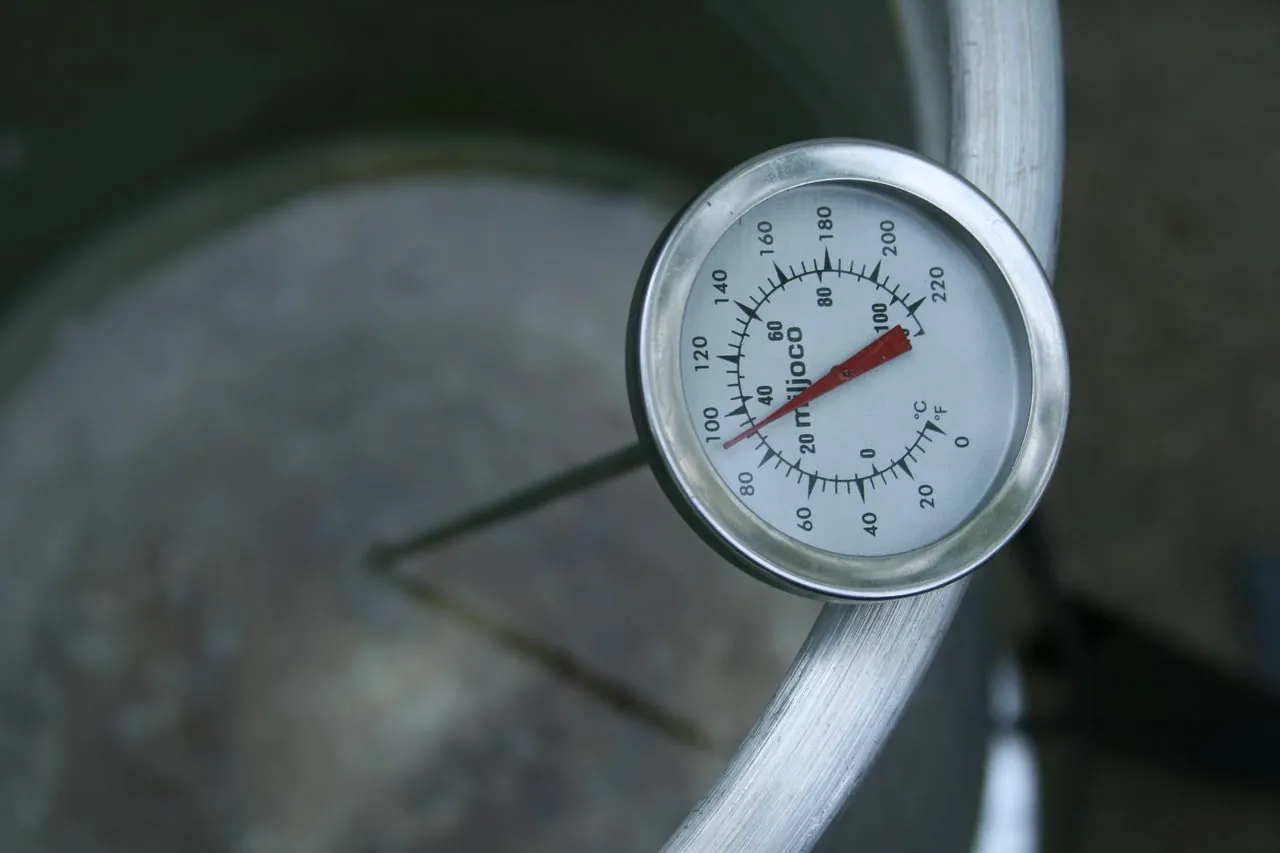
The habit matters more than the instrument, but two qualities separate good from great: speed and a thin probe. A fast, needle-thin tip leaves a small hole and settles on a number before your hand tires or your heat escapes, and speed matters more than most buyers expect, because every second the oven door hangs open costs heat you spent time building. Analog dial thermometers, the kind shaped like a screwdriver, are slower and markedly less accurate, and they belong in the drawer of retired tools. Among digital models, the ThermoWorks Thermapen is the industry favorite, the unit tucked into professional aprons, though several solid competitors cost less, and any reliable instant-read beats no thermometer at all. Features worth paying for: a rotating display for either-handed reading, splash resistance and a backlit screen for grilling after dark.
Consumer minimum temperatures and controlled time-temperature pasteurization are different instructions.
PTFE coatings fail at high heat and with metal tools. The honest lifespan of a nonstick pan, the safety facts, and better care habits.
Skip the block set. An 8-inch chef’s knife, a paring knife and a bread knife do everything. Steel types, handle shapes and the feel test.
Le Creuset has cast cocottes in France since 1925. When enameled cast iron is worth it, when bare iron wins, and how to make yours last.