Kimjang: The Kimchi Ritual UNESCO Listed as Heritage
Every late autumn, Korean households make a winter’s worth of kimchi together. The UNESCO-inscribed tradition and the science of the jar.
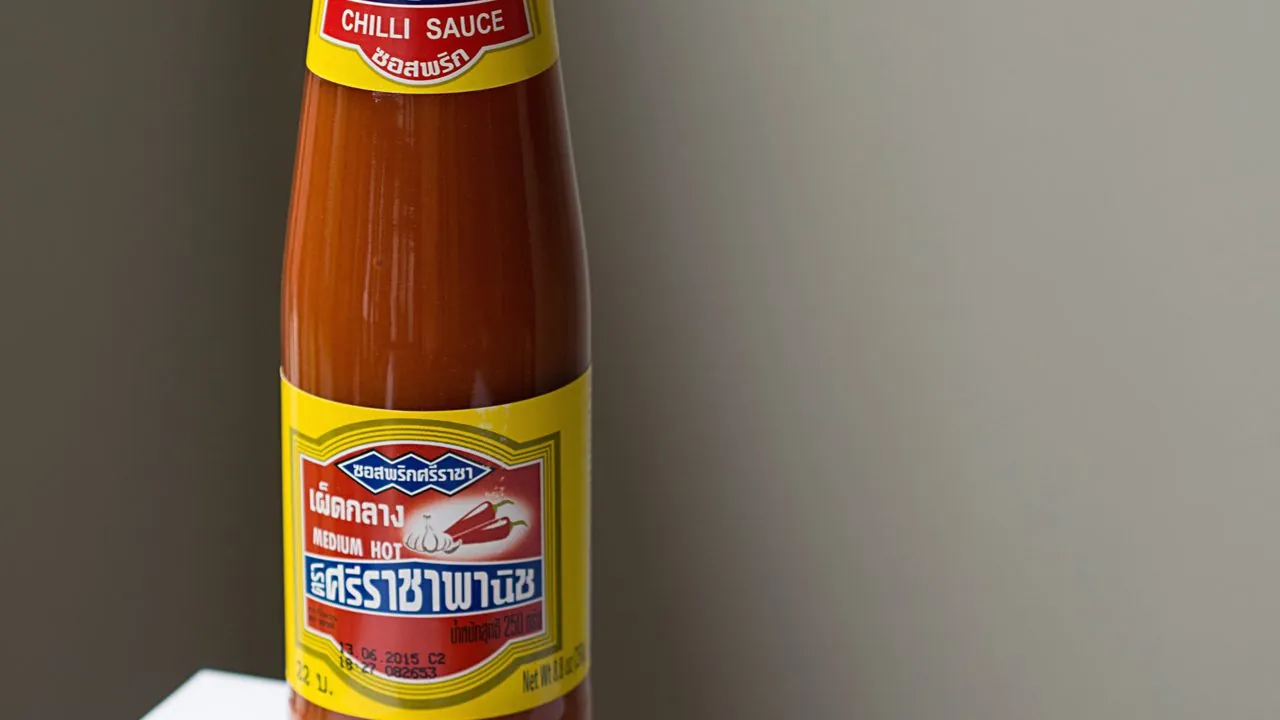
For a stretch of the early 2020s, one of the most recognizable bottles in American kitchens all but vanished. Supermarkets posted signs limiting customers to a bottle or two. Restaurants stretched their supply. Resellers online charged whatever the traffic would bear for a sauce whose maker had never run a single advertisement. For a condiment that had spent forty years being everywhere, absence turned out to be its own kind of fame. The empty shelves told a story that began four decades earlier, with a refugee, a pepper harvest and a rooster.
David Tran came to the United States the long way. A Vietnamese-Chinese refugee, he left Vietnam aboard a freighter named the Huey Fong and arrived in Los Angeles in 1979 or 1980, part of the enormous wave of displacement that followed the war. He had already been in the chili sauce business in Vietnam, and he did not stay out of it for long. In 1980 he founded Huy Fong Foods — named for the ship that carried him — and began making chili sauces for the Chinese and Vietnamese communities of Southern California, selling his first jars out of the back of a van. The company that would become a fixture of American refrigerators began not as a brand strategy but as an immigrant’s livelihood. The smooth, garlicky, vividly red sauce Americans now simply call rooster arrived shortly after and quietly swallowed the rest of the lineup. He made a chili sauce for people who cooked with chilies, priced it for neighborhood kitchens, and let the bottles do the talking — a habit the company never outgrew.
The packaging never changed much, and it never needed to: squat clear plastic, a green cap, a rooster on the label — Tran was born in the year of the rooster. Plastic, for what it is worth, was practical rather than stylish, since glass breaks in busy kitchens. Huy Fong never ran an advertisement. It never patented the sauce, and it never trademarked the name sriracha, which is why sriracha today is a category rather than a brand, with dozens of imitators crowding the shelf. The sauce spread the way condiments actually spread. Restaurants bought it because it was consistent and inexpensive; line cooks carried the taste home; grocery demand followed the kitchens rather than leading them. By the 2010s the rooster bottle sat on tables far beyond the Asian restaurants that first stocked it, an American default built without a single advertising dollar.
None of it worked without peppers, and for close to three decades the peppers came almost entirely from one place: Underwood Ranches, a grower in Ventura County, California, that planted to Huy Fong’s schedule and sold Huy Fong its harvest of red jalapeños, in fields up the coast from Los Angeles. The relationship worked less like a supply chain than like a single organism — one farm, one customer, decades of accumulated knowledge about exactly when the chilies would ripen and how fast the factory could take them. For years the system worked so smoothly that most people eating the sauce never thought about where its peppers grew. The supply relationship broke down in 2016; the jury award followed in 2019. The two companies went to court over their contracts and payments, and a jury handed down a judgment of roughly 23 million dollars against Huy Fong. Whatever the legal merits on either side, the practical outcome was blunt: the sauce and its farm split apart just as demand had never been higher.
Then the peppers themselves went short. From 2020 through 2023, drought squeezed the harvests Huy Fong now had to assemble from new and smaller farms, and the company spent those years building, mid-crisis, the supply it had spent decades never having to think about. Chili quality and quantity fell together, and the famous sauce began to thin, and then to disappear. Availability was disrupted; a claim that every affected batch became watery would require product evidence that is not provided here. By 2022 Huy Fong was telling customers plainly that production had been scaled back heavily and that resupply could not be promised. For a company that had never missed a season, it was an unfamiliar sentence to type. The shortage came in waves and lingered for years:
The chronology is essential to the supply-chain explanation. Underwood's statement submitted to Congress says the relationship ended in 2016. The jury award came in 2019 and the appellate opinion discusses the dispute later still. Describing the farm relationship as breaking in 2019 compresses separate events and obscures the time available for Huy Fong to seek other peppers.
Treat the supplier's narrative as a party's account and use the court opinion for what was adjudicated. Neither establishes every later claim about weather, competing-brand sales or bottle quality. A specific assertion that sauce became watery needs batch evidence, not an imagined sequence of customer reactions.
For shoppers, appearance or cap colour cannot establish a batch's availability history. Compare the actual brand and ingredients if buying an alternative; sriracha is used for multiple sauces with different chilli, garlic, sugar and acidity balances. The durable lesson is the concentration of supplier dependence, rather than a claim that one crop or one lawsuit completely explains every shortage in every later year.
A supplier statement is identified as a party account; the court opinion supplies the litigation chronology.
Every late autumn, Korean households make a winter’s worth of kimchi together. The UNESCO-inscribed tradition and the science of the jar.
UMF 10+ equals roughly 263 mg/kg of methylglyoxal. What the grades mean, who certifies them, and why manuka honey costs so much.
Free acidity below 0.8 percent, peroxide under 20, mechanical extraction only. The International Olive Council rules behind the bottle.