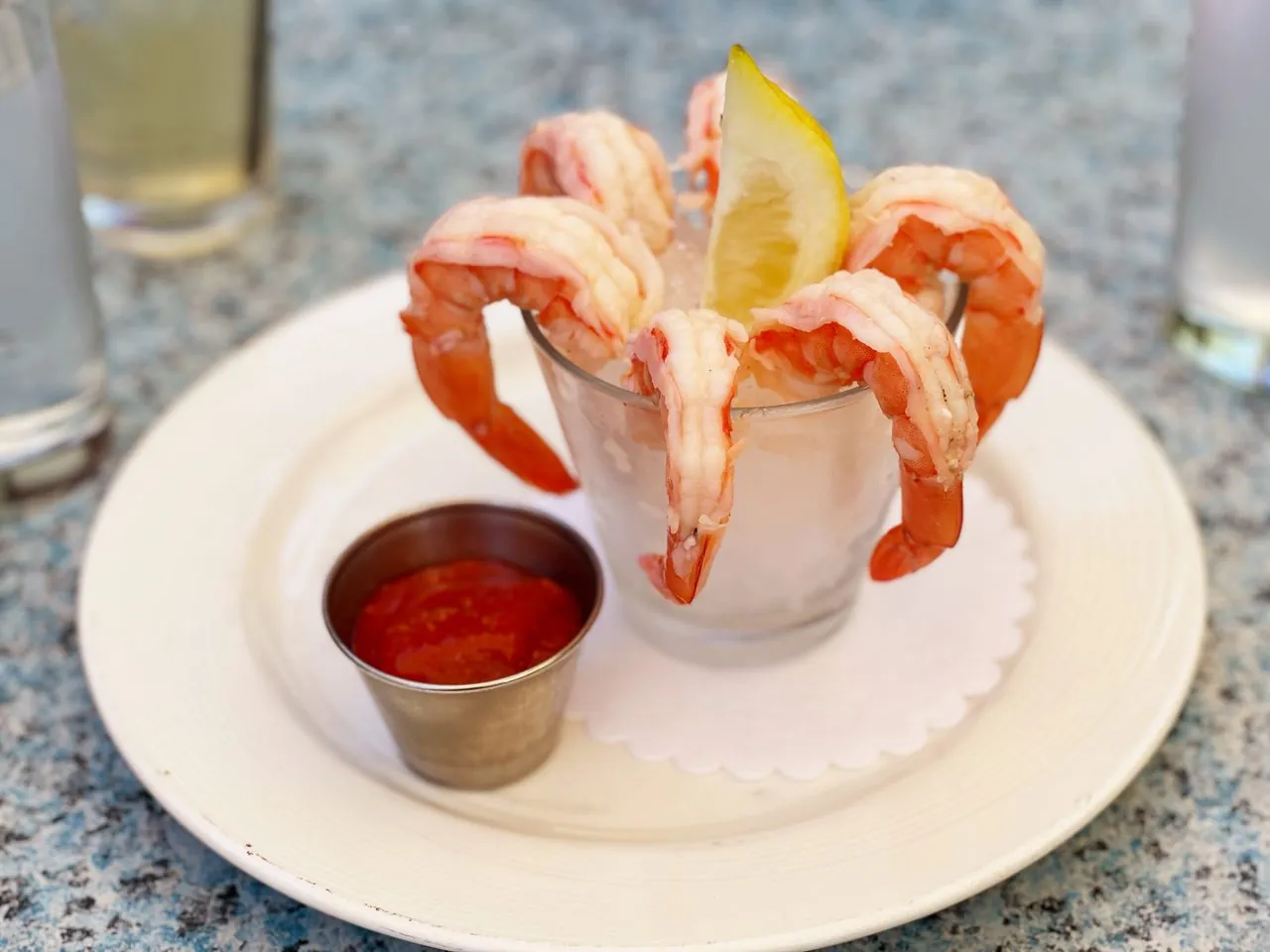
St. Elmo Steak House and the Fiery Shrimp Cocktail Legend
The Indianapolis steak house dates to 1902. Its horseradish shrimp cocktail, documented history and public game-day connection explained.
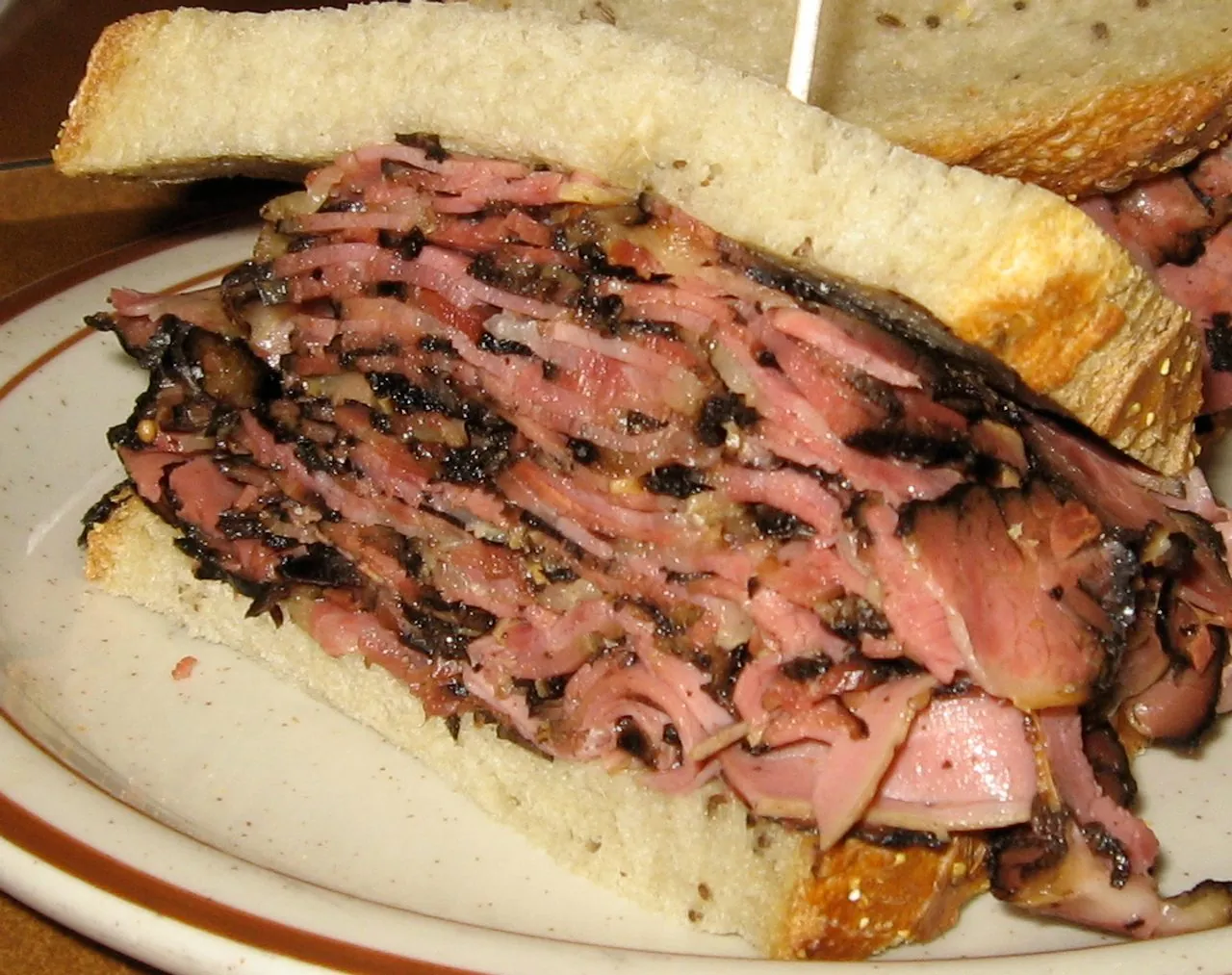
Katz's Delicatessen is associated with New York's hand-carved pastrami tradition and a counter-service format in which a ticket records the order. The deli's own product account describes three weeks of brining before subsequent cooking. That process is a more useful starting point than an imagined sandwich weight or a claim that the storefront, preparation and guest experience have been literally unchanged since the business's nineteenth-century origins.
Katz’s did not start under its own name. In 1888 two brothers named Iceland opened a modest storefront to feed the waves of Jewish immigrants then pouring into the Lower East Side, one of the densest neighborhoods on earth. For a new arrival, the delicatessen was a bridge between worlds: cured meats and rye breads that tasted like the old country, made with the abundance of the new one. In that world a deli was never only a place to eat. It was a hiring hall, a mail drop, a place where Yiddish was the operating language and a stranger could be fed on credit. The counter did the work of a neighborhood square. Early in the twentieth century a butcher named Willy Katz bought an interest in the shop, the sign briefly read Iceland and Katz, and before long the Iceland name faded away entirely. The pastrami, by all accounts, stayed the same. That continuity is the quiet miracle of the place. Delicatessens opened and closed by the hundreds across twentieth-century New York, and this one simply kept slicing, outlasting neighborhoods, fashions and entire generations of rivals.
The pastrami explains most of it. Each cut is cured in a brine for three weeks, according to the deli's published preparation before it ever approaches smoke, then seasoned with coriander and black pepper, smoked slowly, and finally steamed until the fat turns translucent and the meat yields with almost no resistance. That timeline — a month in the brine before smoking even begins — is precisely why so few delis bother with the real thing anymore. Time cannot be compressed without something being lost, and at Katz’s nothing is lost. The steaming matters as much as the smoke; it is what makes the fat behave, warming the meat through without letting it seize. The result is meat that shatters softly rather than shredding into strings, threads of cracked pepper against a warm, salt-cured interior, and enough richness that a single sandwich can feed two people, or one determined New Yorker with a long afternoon to spend.
Ordering at Katz’s is a small theater with strict stage directions. At the door you are handed a paper ticket, and you guard it carefully, because losing it triggers a famous surcharge that the staff enforces with mock-solemn relish. The ticket travels with you from the counter to the table, accumulating your order in increasingly greasy handwriting. The carvers at the steamy cutting stations have held their posts for decades in some cases, and they will hand you a sliver of pastrami over the counter while you wait — an unofficial sample that doubles as a sales pitch you do not really need. Tipping the carver is tradition. Ask for the meat lean and you may be told, gently but firmly, that you want it fatty. A half-sour pickle and a swipe of deli mustard do the rest of the work, sharpening the fat and cutting the salt. First-timers figure out the rules within minutes, usually somewhere in line.
The Second World War turned the deli into something larger than a restaurant. Katz’s wartime slogan, Send a Salami to Your Boy in the Army, turned a shelf of cured sausage into a national act of care, a way for families to reach across an ocean with something that tasted like home. The phrase entered the city’s permanent vocabulary, and the restaurant has never quite stopped trading on that mixture of salt meat and sentiment. It still ships whole salamis around the country to parents whose grown children moved away, a custom that has outlasted every ration book. The walls today are a dense gallery of framed photographs — actors, politicians, boxers, the famous and the merely devoted — proof that a century of New Yorkers considered this room worth claiming as their own.
In 1989 the deli acquired its most famous scene. When Harry Met Sally filmed its climactic restaurant moment in Katz’s main dining room, at the corner table near the window, and the punchline — delivered by an older woman at a neighboring table — became one of the most quoted lines in American film. The woman, as it happens, was the director’s own mother. Today the table carries a small sign so that no pilgrim need guess, and the deli leans into the fame without apology. Tourists come for the movie and leave, more often than not, converted to the meat.
Katz's published product account describes three weeks in brine, followed by further cooking stages. That is the period specified by the operator for its product, rather than a universal rule for all pastrami. It still does not give a home cook a complete curing formula, because brine concentration, curing agents, meat geometry and temperature controls are not supplied here.
Do not turn a historical description into an improvised meat-preservation project. For food purchased from the deli, follow the instructions for the exact product: ready-sliced meat and a whole pastrami have different reheating procedures. Keeping the packaging label and instructions is more useful than assuming every smoked meat is ready to eat in the same way.
The counter ticket and hand-carving tradition explain the dining format, but current prices and lost-ticket policies should be checked with staff. A film scene or a famous slogan is evidence of cultural visibility, not a measurement of portion size or a guarantee that the modern storefront has remained physically unchanged since the founding year.
Preparation details follow the deli's account; this is not a home meat-curing safety recipe.
The Indianapolis steak house dates to 1902. Its horseradish shrimp cocktail, documented history and public game-day connection explained.
How Matsuhisa, Robert De Niro and their partners built Nobu from a restaurant partnership into an international dining and hotel network.
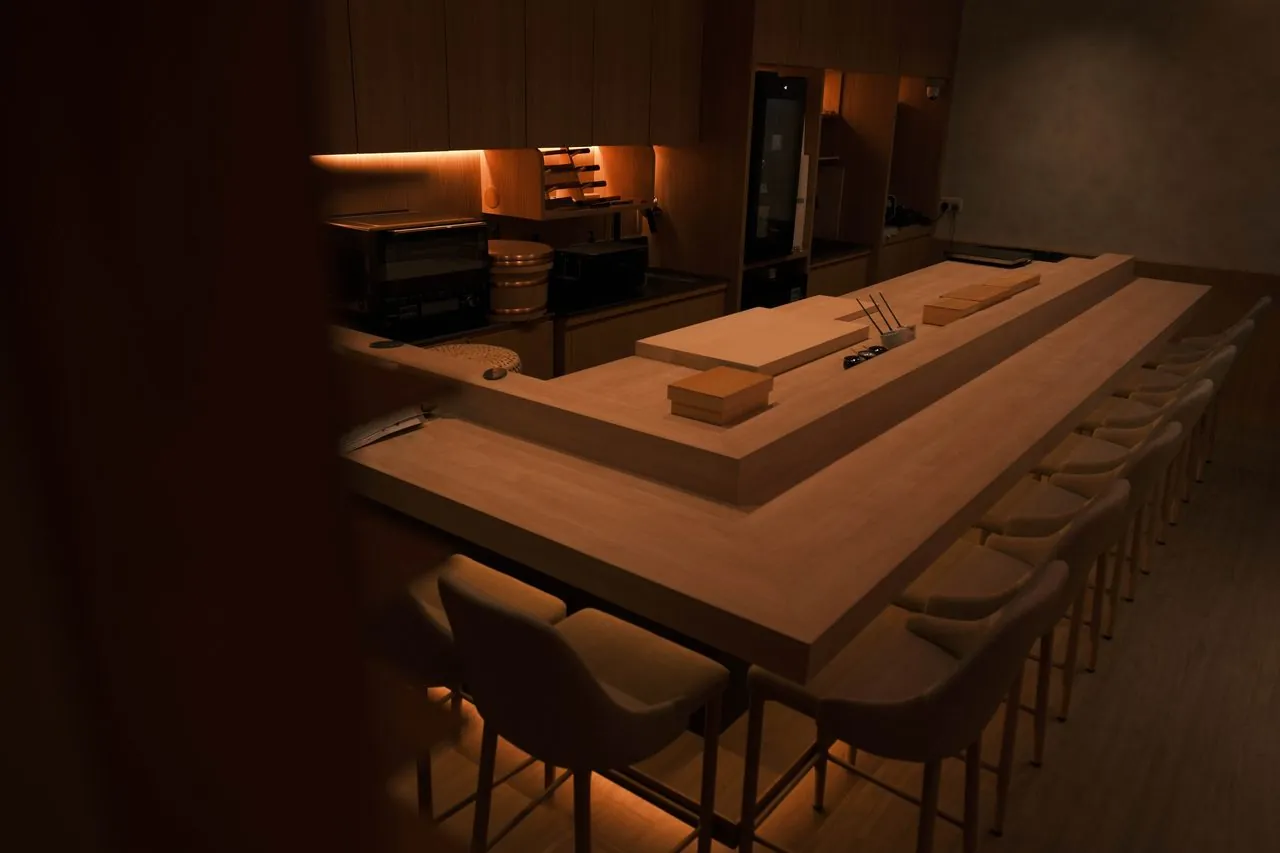
Jiro Ono trained a generation of sushi masters from a ten-seat subway-adjacent shop. Why the Michelin guide eventually stopped listing it.