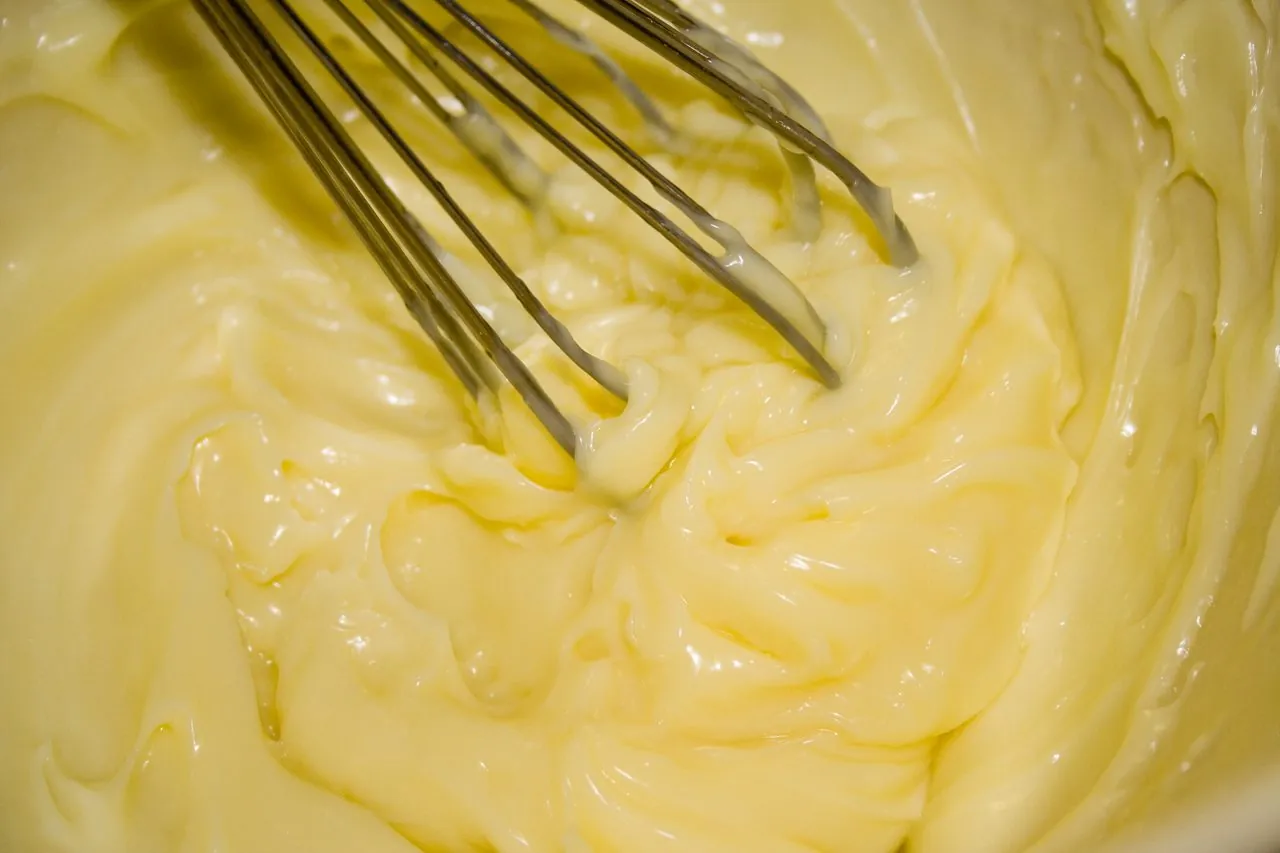
The 30-Second Mayonnaise: Emulsion Science in a Jar
One yolk can carry a full cup of oil — if you understand lecithin. The immersion-blender mayonnaise method and how to rescue a broken one.
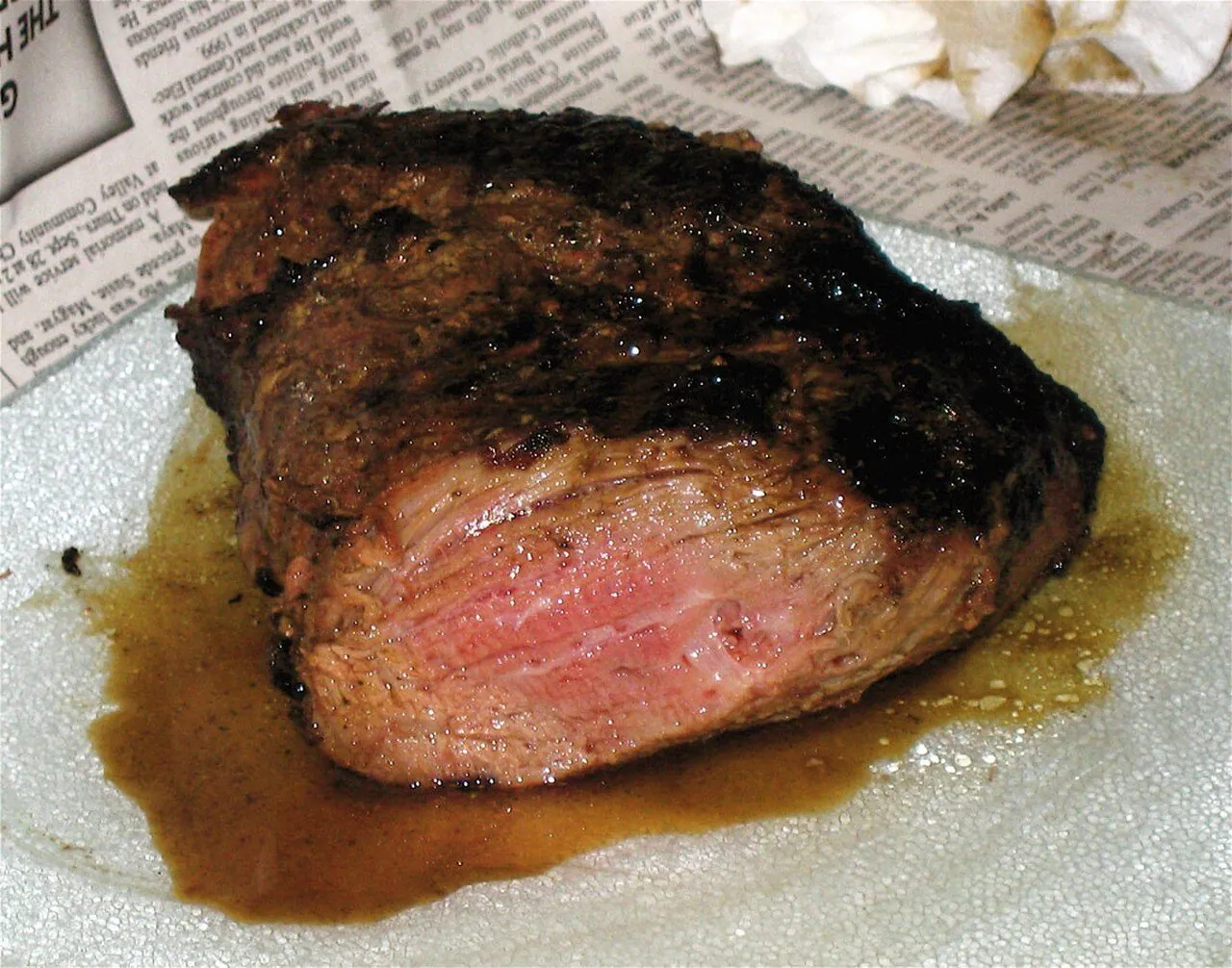
The steak leaves the pan with a dark crust and a low hiss, and every instinct says cut it now. Resist. The five to ten minutes that follow are not a delay between cooking and eating; they are the final step of cooking, and they happen on the cutting board. During the rest, the interior temperature climbs several degrees, the clenched muscle fibers relax, and the juices that would otherwise flood the board settle back into the meat where they belong. Understand why that works and resting stops being folklore; it becomes a technique you can time and trust.
Slice into a steak straight from the heat and the evidence pools out at once: a rim of pink liquid spreading across the board. That liquid is not fat, and it is not simply water. It is water carrying myoglobin, the oxygen-storing muscle pigment that gives red meat its color and much of its savory depth. A steak is roughly three-quarters water by weight, and during cooking that water is actively squeezed outward as the muscle fibers contract — the way a fist tightens around a sponge.
The contraction is not mysterious. Muscle proteins denature and coagulate as they climb through temperature, shrinking the fibers and forcing moisture toward the surface and the center. At the moment a steak comes off the heat, those fibers are at their tightest and the interior is effectively a pressurized system. Cutting immediately opens that system: the juices have nowhere to go but out, onto the board and away from the bite. Give the meat a few quiet minutes and the pressure eases on its own.
The second reason to wait is that the steak is still cooking. Heat moves from the surface inward by conduction, and a thick piece of meat comes off the pan with a steep temperature gradient: a seared exterior several hundred degrees, a center at target, and the layers between still catching up. Once off the heat, that gradient equalizes. The exterior cools while the interior climbs, a phenomenon cooks call carryover cooking.
In practice, a steak's internal temperature rises another 5 to 10 degrees Fahrenheit during the rest, depending on thickness and how hard it was seared. This is why experienced cooks pull a steak from the heat 5 degrees shy of the target doneness and let the finish happen off the fire. Skip the rest and pull at exactly 130 degrees, and the center creeps past medium-rare anyway — minus the juiciness. The rest is not a courtesy pause. It is the last leg of the cook, and it runs whether you plan for it or not.
The working rule of thumb, and it holds up well, is to rest a steak for roughly 5 minutes per inch of thickness. A 1.5-inch ribeye or strip needs about 5 to 10 minutes. A half-inch flat iron wants only 3 or 4. A two-inch porterhouse is closer to 10. The window is short enough to overlap with other work — this is precisely when you build the pan sauce, dress the salad or open the wine.
Two practical details matter as much as the clock. Rest the steak on a warm plate or cutting board, never a cold one, which steals heat from the underside. And tent it loosely with foil — loosely is the operative word. A tight wrap traps steam against the crust and softens the very surface you worked to crisp. The foil's only job is to slow heat loss at the surface; it is a raincoat, not a seal.
The older explanation for resting, repeated in generations of cookbooks, held that juices flee to the center during cooking and need time to migrate back outward. Modern testing, most rigorously by J. Kenji López-Alt, suggests a simpler and more mechanical story. What happens during the rest is that the tightened muscle fibers relax as the temperature eases, and as they relax, the squeeze on the interior juices lets up. The meat reabsorbs a meaningful share of the moisture it had been holding at bay.
Side-by-side comparisons of steaks cut immediately against steaks rested make the difference unmistakable: the rested steaks shed dramatically less liquid onto the board, and the effect grows with rest time. Counterintuitively, a longer rest does not leave a thick steak cold, because a big piece of meat loses heat slowly and its thermal mass works in your favor. The board, in other words, is not where flavor is lost. It is where flavor is kept.
Resting scales with juiciness and thickness. A thin patty smashed and cooked well-done has little juice left to protect and gains almost nothing from a rest. A thick, medium-rare steak is the opposite case, which is why restaurant kitchens build resting time into every ticket. If you rest only one thing, rest the thick, pink-centered one.
The finish matters. Slice against the grain with a sharp knife, in one confident pass per cut; sawing drags the fibers loose and squeezes out the juices you just preserved. Cut only what you are serving; a whole steak holds beautifully through its rest but begins weeping within minutes of being sliced. Hot plates, ready table, then knife.
Drop two habits while you are at it. Do not rest on a rack the way you would fried chicken — a few minutes of board contact is fine, and airflow buys nothing here. And never rest in the refrigerator: chilling the exterior congeals fat and dulls the crust, undoing the point entirely. Five quiet minutes, a loose foil tent, a warm board, then slice and serve immediately.
The experiment discussed here is J. Kenji Lopez-Alt's published work, not a trial carried out by this magazine. Its useful result concerns liquid loss under the conditions compared. It does not mean every thickness, cooking method or resting duration has an identical effect, and a vivid account of juice on a board is not itself a measurement.
Keep doneness and safety separate. USDA consumer guidance for whole beef cuts is at least 145 F (63 C) before removal from heat, followed by at least three minutes of rest. A lower-temperature steak can be a preference, but the preference should be labelled as undercooked rather than borrowing the safety status of the recommended endpoint.
For serving, use a warm plate, avoid a tight steam-trapping cover and slice only what will be eaten. A thin steak loses heat faster than a thick roast, so an unnecessarily long rest can compromise the meal. The practical decision is to coordinate sauce and sides while the meat rests, not to obey a universal minutes-per-inch law regardless of the cooking method.
External experiments are attributed to their author; no original steak trial was conducted for this article.
One yolk can carry a full cup of oil — if you understand lecithin. The immersion-blender mayonnaise method and how to rescue a broken one.
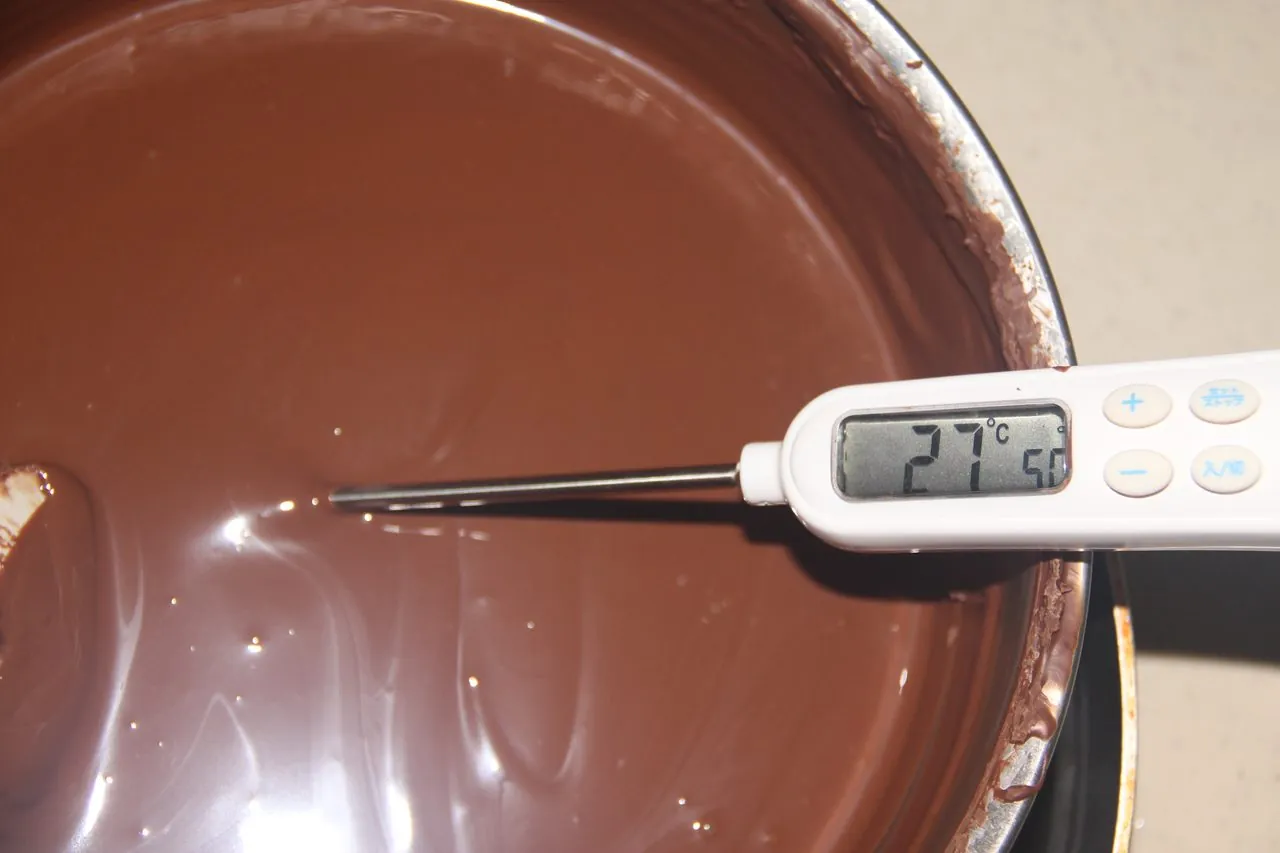
Match melting, cooling and working temperatures to dark, milk or white chocolate. Manufacturer curves and a small setting test guide the process.
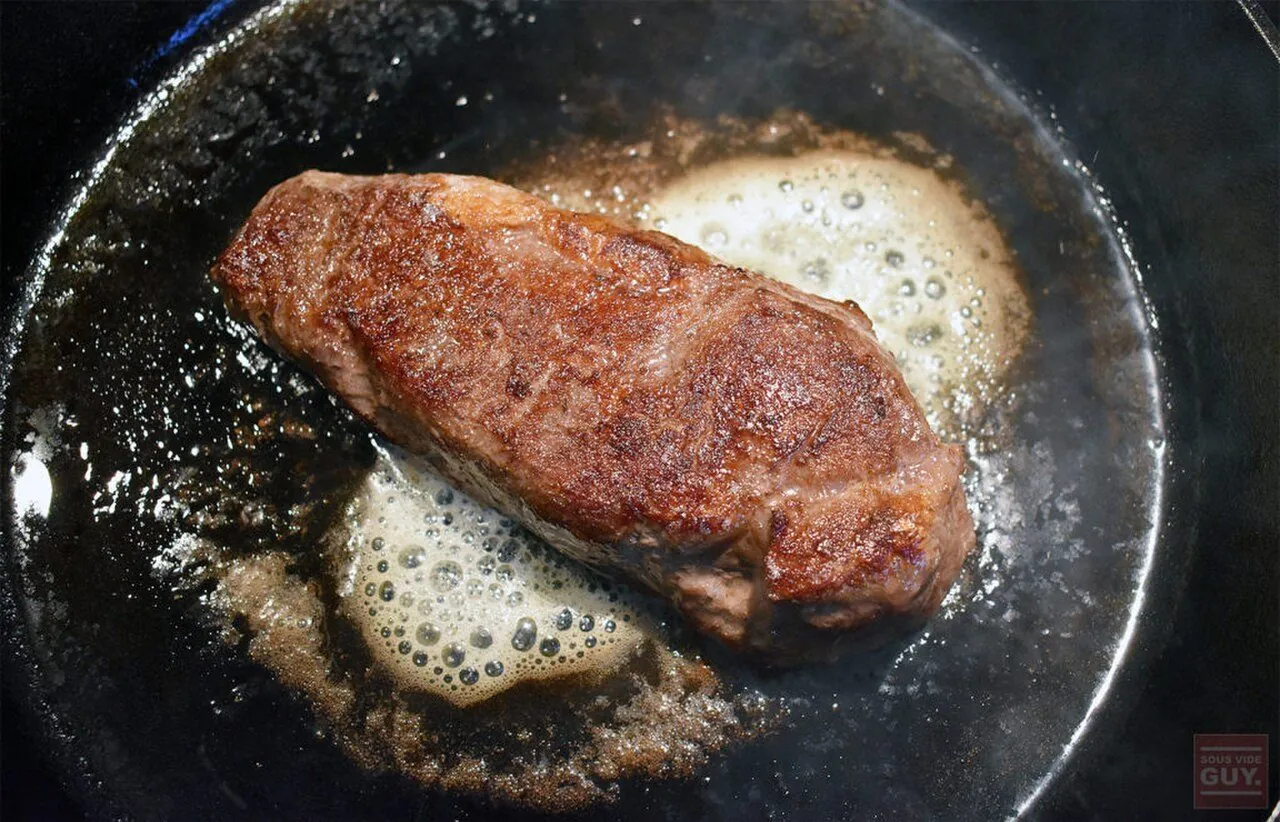
It starts around 285 degrees and it is not caramelization. The chemistry of browning, and the dry-heat rules that make it happen faster.