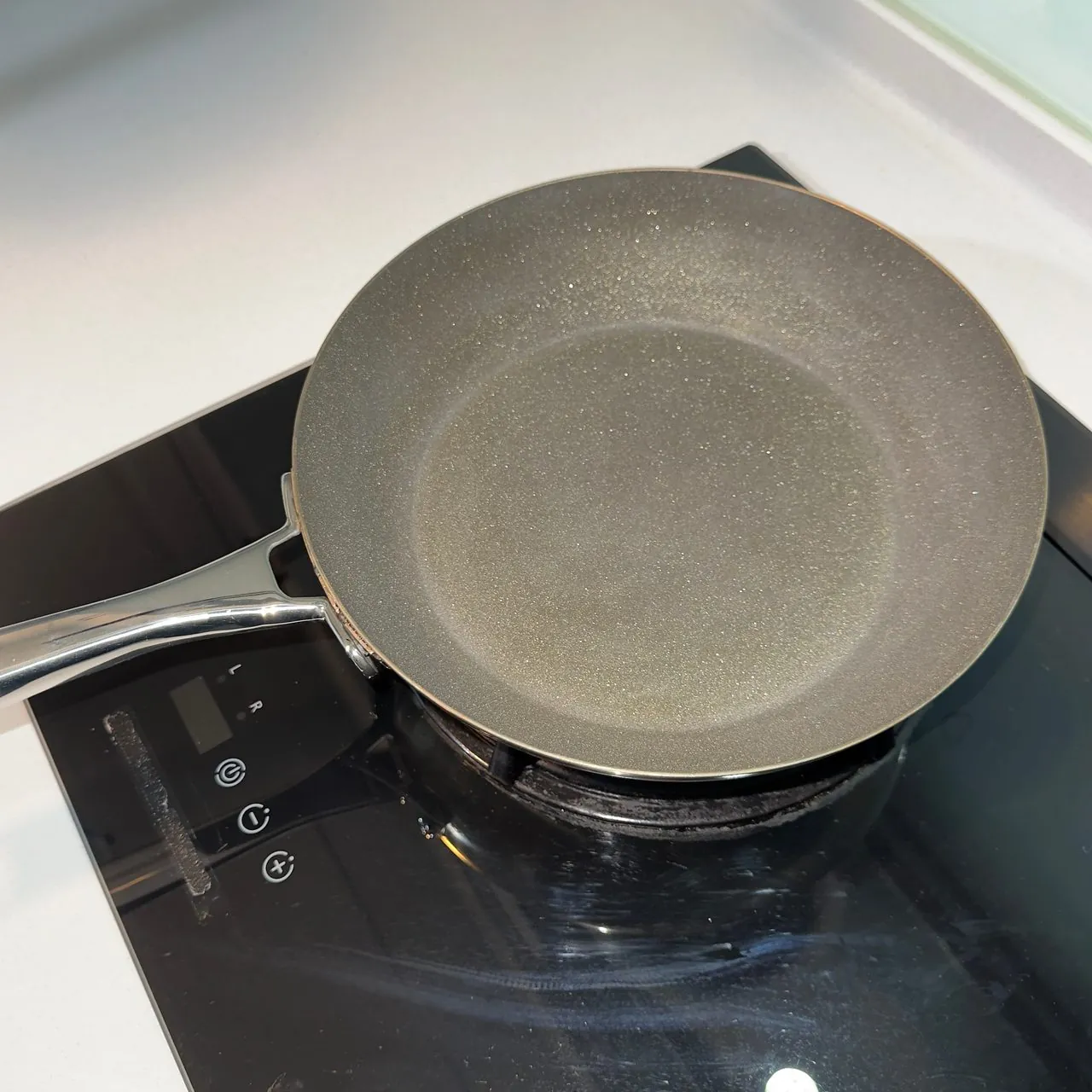
Nonstick Pans: How Long They Last and When to Toss Them
PTFE coatings fail at high heat and with metal tools. The honest lifespan of a nonstick pan, the safety facts, and better care habits.
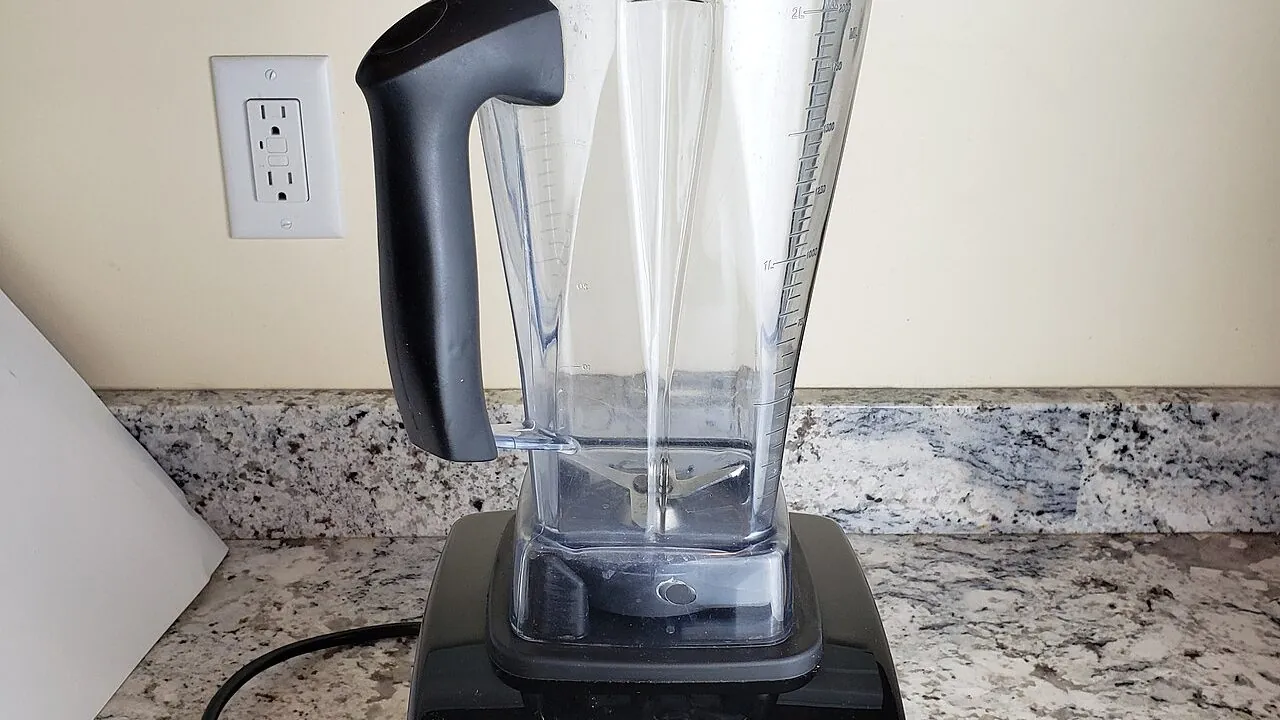
The sticker is the obstacle. A serious blender costs roughly what a month of groceries does, and the internet is full of people insisting you can live without one. Fair enough. But the Vitamix has been winning the same argument for a century, and its history explains why the price holds: this is a company that has always sold its machines by demonstration, letting the result do the talking. Whether the machine is worth it for you comes down to a simpler question than any spec sheet answers: how often would you actually run it? The machines have not changed shape much in decades, and neither has the sales pitch, because both keep working.
Write down the tasks your current blender fails: a fibrous smoothie, a thick nut butter, small quantities that sit below the blades or a soup that needs several batches. Each points to a different issue with jar shape, tamper use, capacity or power. A large nominal motor rating alone cannot tell you whether a new machine solves the specific problem.
Compare the actual model's minimum batch, jar height, lid procedure, noise information and warranty terms in your country. A seven-year warranty described for one line should not be assigned to every product bearing the same name. Peak horsepower is also not a continuous-use measurement that can be compared casually across appliances.
Blade friction can heat a mixture, but steaming does not demonstrate that every raw ingredient is cooked or that a food-safety target has been met. Follow the manufacturer's recipe and hot-liquid instructions. Certain vegetables taste better cooked first, and raw meat or other hazardous ingredients should never be treated as safe merely because a blender jar feels hot.
William Grover Barnard, known to a generation of customers as Papa Barnard, founded the company in Ohio in 1921, selling kitchen products the direct way: in person, with a crowd and a countertop. When the blender arrived, he embraced it completely. The first Vitamix blender went on sale in 1939 for 13.95 dollars, pitched not as a gadget but as a path to whole-food health. In 1949, the company aired a half-hour demonstration on WEWS in Cleveland, described in its history as the first infomercial, a live demonstration with a hard arithmetic problem attached: the company needed to sell 18 machines that night to break even. It sold more than 400. The pitch has barely changed since, because the demonstration still works. The stage has moved from county fairs to television to the internet, but the structure never changes: raw ingredients in front of a crowd, one machine, and results nobody in the room expected.
The 1969 Vitamix 3600 introduced the party trick that still sells machines today: hot soup from raw ingredients. Run the blades fast enough for long enough and the friction of metal on food generates real heat, no burner required. It is physics rather than magic, and it doubles as a stress test. A motor that can drag cold vegetables and stock to steaming without stalling, bogging down or tripping its thermal cutoff is a motor built for nearly anything a home cook will ask of it, on the first day and the thousandth. Home cooks use the same trick on winter squash, onions and roasted peppers: appropriate ingredients in, a heated mixture out; follow the manufacturer's recipe and any required precooking.
In 1992 the company launched its Drink Machine for commercial use, and high-performance blenders quietly became infrastructure. Walk into a major coffee chain and the whir behind the counter is almost certainly one of them; smoothie shops, juice bars and restaurant kitchens standardized on the same platform because a motor that dies mid-rush costs more than the premium ever did. Through all of it, Vitamix has remained family-run, now in its fourth generation, still based in Olmsted Township, Ohio, still demonstrating at county fairs and big-box stores the way Papa Barnard did in storefronts a hundred years ago.
Open the spec sheet and the premium decays into concrete hardware:
Count what sits in the cabinet of a daily user: the smoothie blender, the milkshake machine, the immersion blender for soups, the food processor pressed into puree duty, the ice crusher. A high-performance blender absorbs most of that work, and a household that cooks from scratch often finds two or three single-purpose tools gathering dust within a season of the upgrade.
The machines are loud enough to interrupt a conversation two rooms away. They are heavy, tall and permanently claim counter space if you want to use them daily, and the carafe is awkward under low cabinets, which is why most owners end up leaving it out anyway. Cleaning is easier than it looks, since a drop of soap and a burst of hot water does most jobs, but the carafe and lid still take real room on the drying rack. And the blunt truth remains that a moderately priced blender handles intermittent tasks, a milkshake here, a dressing there, just fine. If your blending is occasional, the premium buys very little you would notice.
The arithmetic changes with frequency. A household that makes a green smoothie every morning, grinds its own nut butter, blends soups weekly or runs a small food business will use the machine hard enough that the cost per use collapses within a year or two, and a seven-year warranty turns the price into a long lease on a commercial tool. For everyone else, the honest answer is not yet. The 1949 demonstration logic still applies: the machine earns its price only if it runs most days. Papa Barnard would tell you to stand at the counter, watch the soup steam, and then count how many mornings that motor would run in your kitchen. If the number is high, buy it and never look back. If it is low, keep your money and your counter space.
A buying framework and manufacturer history; no in-house blender benchmark or current-price survey is claimed.
PTFE coatings fail at high heat and with metal tools. The honest lifespan of a nonstick pan, the safety facts, and better care habits.
Skip the block set. An 8-inch chef’s knife, a paring knife and a bread knife do everything. Steel types, handle shapes and the feel test.
Choose a food thermometer by accuracy and use, then measure the right spot. Consumer safety endpoints and sous vide hold times serve different purposes.